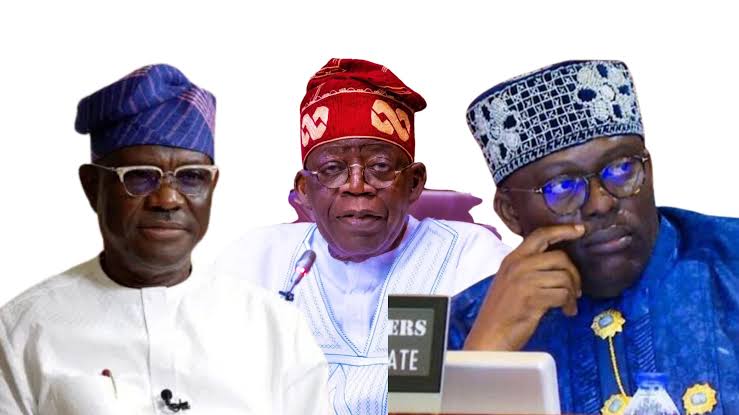
Mathew Dadiya writes on the recent declaration of state of emergency by President Bola Tinubu on March 18, 2025, looking at the democratic implications whilst pointing out the key things that the Administrator, Vice Admiral (rtd) Ibok-Ete Ibas must do to achieve his assigned presidential assignment.
President Bola Tinubu’s recent proclamation of a state of emergency in Rivers State has sparked intense debate and raised significant concerns about the democratic implications of such a move.
The declaration, made on March 18, 2025, cited security concerns and the need to restore order in the state.
At the heart of the controversy is the President’s decision to suspend the elected Governor, Siminilayi Fubara, and the Deputy Governor, Prof. Ngozi Odu as well as all members of the Rivers State House of Assembly while appointing Vice Admiral (retd.) Ibok-Ete Ibas as Administrator to stabilize the instability for six months—though, subject to extension based on the degree of tension in the state.
This move has been widely criticized as unconstitutional and an affront to democratic principles.
According to Section 305 of the 1999 Constitution, the President has the power to declare a state of emergency, but this power is not absolute and is subject to legislative oversight and judicial review.
The Constitution also stipulates that the President cannot remove or suspend elected officials without following due process, such as impeachment or resignation.
The implications of President Tinubu’s proclamation are far-reaching and have significant consequences for Nigeria’s democracy.
The suspension of elected officials sets a dangerous precedent, undermining the principles of federalism and the separation of powers. It also raises concerns about the potential for executive overreach and the erosion of democratic institutions.
Digging deep in the issue, the declaration of a state of emergency in Rivers State has serious security implications. The removal of elected officials could trigger violent protests and unrest, potentially destabilizing the region and exacerbating existing security challenges.
Daunting task ahead for Rivers State Administrator Ibas
As the newly appointed administrator, Vice Admiral (retd.) Ibok-Ete Ibas, you have a daunting task ahead because
Rivers State is at a critical juncture, facing numerous security threats and political tussles. For you to effectively address these challenges within six months as directed by the President and Commander of the Federal Republic, Bola Tinubu, here is a comprehensive areas you must focus on:
Security Threats
There is a need for you to conduct a thorough security assessment —engaging with local stakeholders, security agencies, and experts to identify the root causes of insecurity in the state.
Establish a robust security framework: Develop a comprehensive security plan, incorporating intelligence gathering, community policing, and collaboration with federal security agencies.
Address militant activities: Engage with militant groups, exploring avenues for peaceful resolution and rehabilitation, while ensuring that those responsible for violence are held accountable.
Political Tussles
Foster inclusive governance: Engage with all stakeholders, including opposition parties, civil society organizations, and traditional leaders, to promote a culture of inclusivity and transparency.
Address electoral disputes: Establish an independent commission to investigate and resolve electoral disputes, ensuring that the democratic process is respected and upheld.
Promote economic development: Implement policies that stimulate economic growth, create jobs, and reduce poverty, thereby reducing the underlying tensions that fuel political conflicts.
Institutional Reforms
Strengthen institutions: Reform and strengthen key institutions, such as the judiciary, legislature, and law enforcement agencies, to ensure they are effective, independent, and accountable.
Promote transparency and accountability: Implement measures to increase transparency and accountability in government, including regular audits, budget disclosures, and freedom of information laws.
Support civil society: Foster a vibrant civil society by supporting non-governmental organizations, community groups, and independent media outlets.
Community Engagement
Engage with local communities: Establish a robust community engagement framework, ensuring that local concerns are heard and addressed.
Promote dialogue and reconciliation: Facilitate dialogue and reconciliation efforts between conflicting groups, fostering a culture of peace and understanding.
Support community development projects: Implement community development projects that address basic needs, such as healthcare, education, and infrastructure.
By implementing these measures, Vice Admiral (retd.) Ibas can effectively address the security threats and political tussles in Rivers State within six months of his peace restoration period as directed by President Tinubu, paving the way for a more peaceful, stable governance, and prosperous future for governor Fubara and the successive ones.
In summation, President Tinubu’s proclamation of a state of emergency in Rivers State has significant democratic implications that must be carefully considered. While the President may have legitimate concerns about security in the state, the suspension of elected officials is a clear violation of the Constitution and undermines the principles of democracy. It is essential that the National Assembly and the judiciary take immediate action to address this crisis and ensure that the rule of law is upheld.