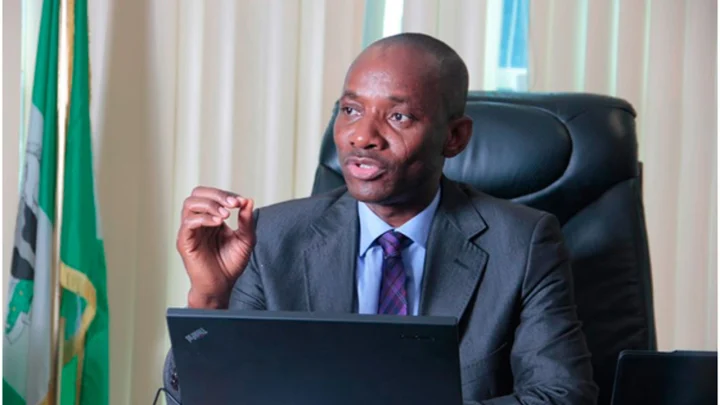
The image highlights the impact of misinformation on media credibility in the digital age.
“We commend the Nigerian Guild of Editors, NGE, led by its President, Mr. Eze Anaba, for collaborating with the European Union, EU, in an effort to stamp out fake news and rebuild the credibility of the mass media in Nigeria. The one-day training for media owners and members of the guild held in Lagos on the 25th of July 2025 is a step in the right direction and must be sustained in order to stem the tide of disinformation, fake news as well as misinformation spreading in many areas across the country.”
Originally, the mass media included newspapers, magazines, radio and television. However, there is a new term known as the ‘new media’, which includes all social media platforms such as Facebook, WhatsApp, X (formerly Twitter), Tik Tok, among others. We also understand that, ,most times, people make use of the term ‘press’ when they want to refer to the mass media, even though, originally, press is strictly the print media (newspaper, magazines, newsletters, companies’ periodicals, etc.)
Media practitioners have to be trained to become experts in the different areas of the industry such as information dissemination, entertainment among other programs and features, for societal development. Traditionally, media practitioners in Nigeria and other parts of the world are employed based on their expertise and professionalism.
Some theorists believe that fake news stories are popping up from every corner today as a result of the influence of social media. The social media (or new media) today give more people access to information (whether credible or fake) easier and faster than the traditional mainstream media. This is because whatever that is made public through them has the capacity of reaching every corner of the world, real time. This reality has made almost all the mainstream media outfits to also operate social media (or new media) accounts. So, the new media also enhances the work of the mainstream media which are registered as legal organizations and have their integrity to protect.
We understand that fake news, misinformation and disinformation do not come by only as a result of professional media practitioners not living up to expectations. Here, it would be the responsibility of media executives to ensure that fake online media accounts are discovered by relevant government agencies and sanctioned. If appropriate measures are not taken to address this direct affront on the credibility of the mass media industry, especially in Nigeria, the confidence reposed in the media as the source of information is likely to become a thing of the past.
We commend the Nigerian Guild of Editors, NGE, led by its President, Mr. Eze Anaba, for collaborating with the European Union, EU, in an effort to stamp out fake news and rebuild the credibility of the mass media in Nigeria. The one-day training for media owners and members of the guild held in Lagos on the 25th of July 2025 is a step in the right direction and must be sustained in order to stem the tide of disinformation, fake news as well as misinformation spreading in many areas across the country.
This is a clarion call on all those who are in the mass media to, first of all, refuse to spread fake or unverified stories, then ensure that monetary inducement does not control how a news item is treated. The media owners are also called upon to ensure the proper remuneration of employees under their media outfits. Public office holders make use of propaganda as a tool to continue to win the admiration of the public. A poorly-paid, or not-paid media practitioner is likely going to accept it to be used by them as a tool to achieve their aim.
So, media owners should realize the important roles they are given as stakeholders in the project of governance and societal advancement. This realization should spur them to, not only pay journalists and other media practitioners as and when due, but also pay them well, in commensurate with the work that they do.
The popular saying that “he who plays the piper dictates the tune” still works in our society today, but the media owners can assume the position of the players of the piper instead of allowing outsiders to dictate the tune of their media operations. They should not allow money-bags from outside to be the ones to pay journalists within their organization. This way, fake news and propaganda would be curbed, with disinformation and misinformation rooted out, thereby restoring credibility to the media.