By Aaron Ossai
As part of efforts to end Out-Of-School Children syndrome in the country, the 10th House of Representatives and Stakeholders have called on State Governor’s to adopt at least five motherless children and train.
The Chairman, House Committee on Women Affairs, Hon. Kafilat Ogbara made the call during the 4th day of the ongoing National Children Leadership Conference organized by Children of African Leadership and Values Development Initiative, CALDEV, founded by Hon. Bamidele Salam.
While applauding CALDEV Founder, Hon. Salam for prioritizing children related initiative whom she observed have been excluded from various programmes organised by public institutions for women, youths, physically challenged and for all strata and all manner of people.
“The impact has been very wonderful, a lot of children have been able to express themselves in terms of acting, singing and doing a number of different things showcasing their talents and learning a lot of things that would naturally not learn in school. So, this is a very good initiative, it’s a very laudable programme.
“For government policy, I want to believe that the president of Federal Republic of Nigeria is one a father, and a man that cares about the young people. This is why in his last national speech, he told us that he’s going to be organizing a conference for young people across the nation. And this is one of the ideas that we think will be able to affect the lives of our young people generally positively.
“When we give our young people a voice then we are preparing for our future and I’ve told young people that I’ve come across to let them know that there is future anywhere, the future is now. So, we need to start including our young people in everything that we do, so that the leadership talent and.level that they need to get to, will be done naturally, because they have been part of the process from the beginning.”
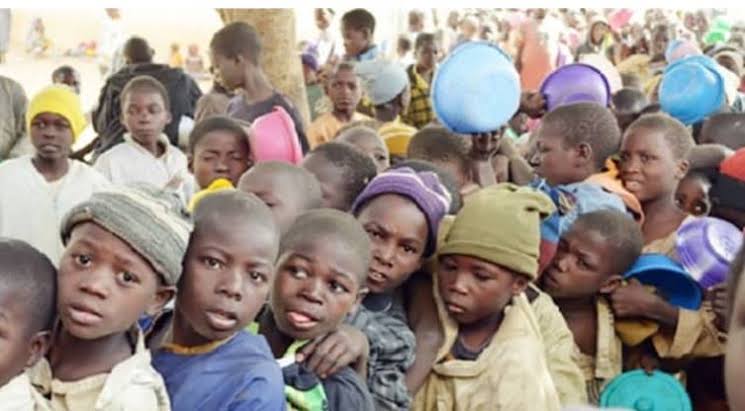
“For your information, we have about 60 percent of this number of children that are girls. Apart from that, this population constitutes about 15 percent of the world population of children that are out of school. So, it means Nigeria is taking the large chunk of the world population of children that are out of school and this calls for an emergency, it calms for our proactiveness, it calls for all of us to be called to act.
“So, we need to act as Mother’s, as Parents as Policy Makers, as Government. Even if our Governors can adopt five, five children that are out of school, this will go a long way to remove huge number of children and put them back to school. So, these are things we need to do as soon as possible because when we speak about children being out of school and we are speaking about a better Nigeria, the betterment of Nigeria is ahead and these our children that will become that future.
“Once we are not able to address these issues, from the basics, from the grassroot, from the root, we are not ready for that future for Nigeria. It’s very very important, this is an emergency need to start looking at this area and ensure that our children that are out of school are gotten back to school, “she said.
On his part, Country Director for Plan International Nigeria, Mr. Charles Usie underscored the need for young Nigerians especially the Participants to translate the knowledge acquired from their various schools into skills that will solve human problems.
“We encouraged you to go to school, you’ve gone to school. What you get in school is knowledge and knowledge is what you know, how the world is, you get to learn new things but I want to leave this challenge with you, for you to become a very successful person in life, you need to translate that knowledge into skills, knowledge alone cannot make you to progress in life.
“What you don’t understand is in school, they will not teach you how to be a successful doctor, they will only teach you what the doctors do and that is why you wrote exams. What makes you successful, is how do you translate that to become a skill that can solve human problems,” he noted.
On his part, Hon. Abdulsamad Dasuki who noted that the evolvement of social media has created a wide gap between the older and younger generations of Nigerians.
He said: “I strongly believe it’s high time we start having inter-generations coming together so that we can share knowledge.”