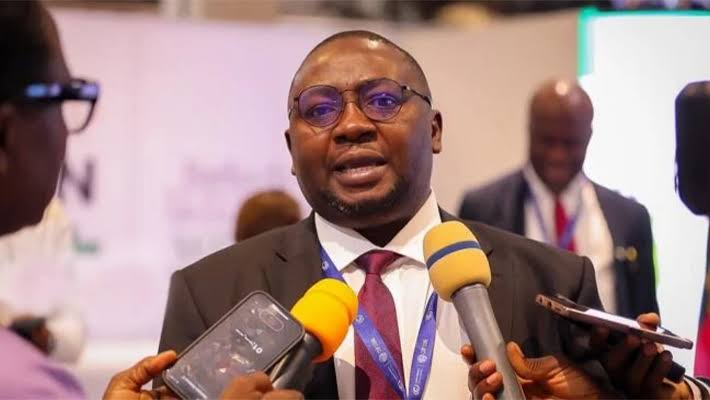
By Onu Okorie
The Minister of Power Federal Republic of Nigeria Adebayo Adelabu, has said that the present administration in Nigeria, led by President Bola Ahmed Tinubu, with the Renewed Hope Agenda, recognizes that energy is not merely a commodity; it is the backbone of economic growth and job creation.
He stated this in a keynote remark delivered at commissioning of 110 MVA power transformer at Isolo 132/33kv Transmission substation in Lagos weekend.
According to him, “it is with great pleasure that I stand before you today at the commissioning of the newly installed 110MVA power transformer here at Isolo Transmission Substation in Lagos. This occasion is a testament to the unwavering commitment to strengthening Nigeria’s electricity infrastructure and enhancing power delivery to citizens.”
The Minister also explained that the Federal Government has continued to implement a multi-pronged approach spanning policy development and strategic implementation plan to ensure the growth and sustainability of the sector.
He noted that the ongoing national infrastructure development programs is to expedite infrastructure expansion, leveraging bilateral funding to de-risk investment, sector commercialization, and strategic partnership with the investment community and development partners to address bottlenecks across the Nigerian Electricity Supply Industry value chain, setting the sector on a path toward bankability and long-term sustainability.
“I want to express my profound gratitude to the Central Bank of Nigeria (CBN) for sponsoring this project under the Service Level Agreement (SLA) framework with the Transmission Company of Nigeria (TCN). This partnership has been instrumental in achieving this milestone.”
I would also like to commend TCN for its diligence and dedication in completing this project. Beyond enhancing electricity supply, this project has broader implications for the economy through direct impact on small and medium-sized enterprises (SMEs) and large industries, reduction in operational challenges caused by power shortages, fostering economic growth and creating job opportunities, and driving local and regional development, particularly in Lagos, a critical economic hub of our nation.”
“We can all agree that our successes have not been without challenges especially at the transmission segment of the value chain. Last year, we recorded frequent grid disturbances and dip in supply level due to various reported factors which include aging infrastructure, resource limitations, capacity inadequacy across the value chain, and predominantly the consistent vandalism experienced on the transmission networks across the country.” He stated.
Adelabu said that the Federal Ministry of Power under the present leadership is always ready to work actively with TCN to resolve these issues to ensure energy security and sustainability across the country and as part of short-term measures, we encourage TCN to have in place a reinforced standard operating procedure for the system, detailed and enforced maintenance plans at the key transmission substations, consistent line tracing especially on lines that are tripping incessantly and critical lines, and assessment of key nodes integrity to prevent future disturbances.
According to him, “for our long-term strategies, we plan to work with TCN to complete all ongoing projects and to invest in regional and super grid projects that will enable a more robust and resilient grid system. We remain optimistic about the promise and the potential the sector holds to drive socio-economic development in the country, and we believe we shall overcome these challenges through active participation of all stakeholders.”