By Michael Oche
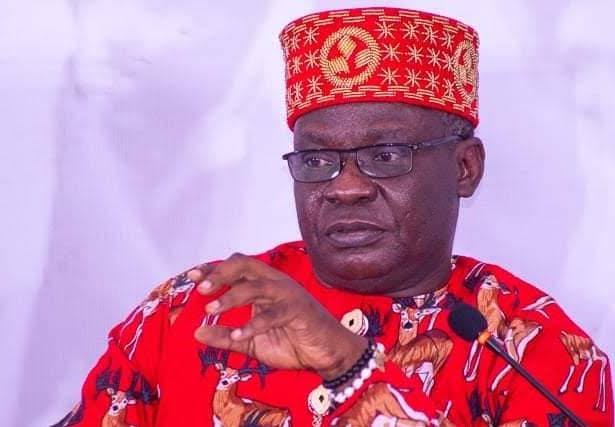
Ezenwa Nwagwu, the executive director, Peering Advocacy and Advancement Center in Africa (PAACA) has charged political parties to resolve their internal ranglings ahead of the Ondo governorship election as well as the 2027 general election.
Ezenwa, who stated this in Abuja, cautioned that the leadership crisis within the various political parties, if not urgently addressed, has the capacity to affect their performance.
“As we move closer to the Ondo governorship election and also prepare for the 2027 general election, there is the need to begin to sound the note of warning early enough for political parties to put their structures in place, rather than wait to blame INEC for electoral losses,” he said.
Nwagwu explained that elections are a multi-step process that goes beyond just voting day, noting that the voting itself is just one crucial event within the larger election process.
According to him, what happens before voting day, including the behavior or misbehavior of political parties and politicians, their agents, security officials and indeed the electorate significantly influences the outcome – their victories or losses
He said, “Unfortunately, are Nigerians paying attention to the factional and leadership crisis within many of the political parties? Sadly, one of the political parties has over a hundred cases in court over leadership tussles. How will this affect their performances in future elections, or do we just wait and expect miracle victories or blame INEC when they lose?”
The PAACA boss commended INEC for the various reforms in the electoral process, especially in ensuring that the power to decide who won the election was returned to the Nigerian people.
He said, “The challenge for us is to reconstruct our narrative in a way that single out the places where we need to improve and also highlights where things have greatly improved. Perhaps another narrative we must correct is that Nigerians often mistakenly attribute election-related issues like vote buying and violence to INEC’s oversight. However, these problems fall outside INEC’s direct responsibility and are instead symptoms of broader societal and political challenges that require a collective solution.”
He said further, “Do you remember a time when election results were being announced in Abuja while people were still queuing to vote at polling stations? Isn’t it true that Nigeria has moved beyond the days when results were fabricated inside hotel rooms or when a single person, armed with hundreds of voter cards, could vote multiple times? Haven’t we also progressed from the era of politicians snatching ballot boxes or stuffing them with ballot papers? And isn’t it equally true that, in recent elections, we are seeing more opposition parties winning against the ruling parties?”