African workers are pushing for debt justice for the continent, the question is why? Michael Oche writes on the campaign being led by ITUC-Africa.
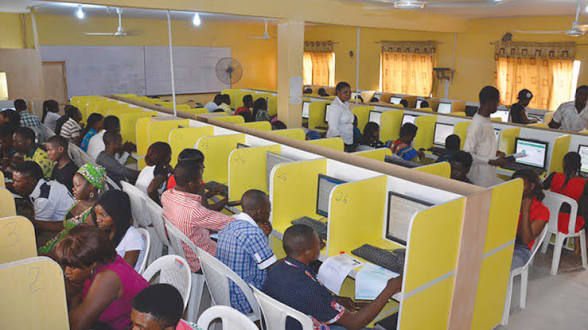
Last year, Nigeria reached an unsettling milestone. The number of out-of-school children in the country hit an approximated 18 million. But this is just a fraction of a broader crisis in a nation where 129 million people, out of an estimated 230 million, live in poverty, grappling daily with the absence of basic needs like healthcare, clean water, and reliable electricity.
This staggering reality is not due to a lack of resources, but partly because Nigeria finds itself trapped in a devastating cycle of debts. Instead of investing in its people, the government is forced to channel much of its revenue toward repaying creditors.
The numbers are not only staggering; they tell a grim story. In 2023, Nigeria spent 98% of its government revenue on debt servicing. While this figure has since dropped to 65%, the problem remains critical. For 2025, ₦16.3 trillion of the country’s ₦54.9 trillion ($59 billion) budget will go to debt servicing.
To put that into perspective: the combined budget for defense (₦4.91 trillion), infrastructure (₦4.06 trillion), healthcare (₦2.4 trillion), and education (₦3.5 trillion) still falls short of what’s needs to service debts.
For workers and citizens, this debt crisis is not just an economic statistic, it is a daily reality. It means hospitals without medicine, schools without teachers, roads filled with potholes, and salaries that never come. It means families choosing between food and electricity. It means broken dreams.
In 2023, the government announced removal of subsidies on petrol, and proposed new tax reforms in a desperate bid to raise money to pay off debts. The results have further deepened the burden on ordinary citizens, with Inflation surging to an alarming 34% in December 2024, and pushing more families below the poverty line.
Yet, it doesnt get any better. Nigeria’s projected revenue to finance the 2025 budget is N36.35 trillion. To cover the deficit, it will need to borrow, further deepening a circle of borrowing.
Nigeria’s staggering debt crisis is a stark reminder of the devastating impact of unsustainable borrowing on African economies.
The country is not alone. Across Africa, from Ghana to Zambia, to Kenya, governments are facing the same dilemma. African Governments are trapped in a vicious cycle of borrowing and repayment, with little left for essential services.
Africa’s total foreign debt has soared past $1.1 trillion, with more than two dozen countries already drowning in excessive debt or are at high risk of default. Roughly 900 million people in Africa live in countries that spend more on interest payments than on health care or education.
How did Africa get here
Despite decades of borrowing to fund infrastructure, public services, and economic recovery, not much has changed. Africa remains poor and in more debts.
Akhator Joel Odigie, General Secretary of ITUC-Africa argues that the system of global finance has made it difficult for Africa to get out of the debt trap.
“The current debt situation Africa finds itself in is by design,” he asserts.
Experts argue that Africa’s debt crisis is fueled by a combination of corruption, mismanagement and predatory lending from international financial institutions, private creditors, and foreign governments. High-interest loans, coupled with unfavorable repayment terms, have also left many countries in a cycle of perpetual borrowing.
For instance, African nations pay interest rates eight times than a country like Germany and four times higher than the United States of America.
“Africa has been shackled by unsustainable debt, much of which has accrued under exploitative conditions that prioritise creditor profits over human development,” a coalition of trade unions and CSOs said in a petition to the AU last February.
Beyond the exploitative lending practices that have deepened Africa’s debt crisis, corruption within the borrowing countries has further exacerbated the problem. Weak oversight and a lack of transparency often mean that borrowed funds do not always serve their intended purpose. Instead, they fuel a cycle of mismanagement and illicit financial flows, leaving ordinary citizens to bear the consequences.
Odigie highlights this troubling reality, pointing to how lenders themselves enable corruption at the expense of Africa’s development.
He says, “Those who lend us money also encourage the culture of kleptocracy in our societies by not observing due diligence in the loan regime. They deliberately leave the space for our leaders to steal, return the money to them by way of asset looting and of course, our people begin to suffer the crisis of paying.”
Recognising the devastating impact of debt on workers, the ITUC-Africa launched its break the debt chain campaign in 2023 to demand debt restructuring, fairer lending terms, and an end to exploitative financial practices that have left African nations trapped in cycles of unsustainable borrowing.
Odigie explains, “the whole global trade arrangement is made in a way that Africa will always be in deficit trade. And that Africa may not be able to get out of that. And so, in deficit trade, in deficit financing, Africa will always borrow more money.”
“This is part of the structural colonization that Africa is still wedded to. Until we deal with it, we cannot break free,” he adds.
The human toll of these crises cannot be overstated.
Crushing obligations to foreign creditors, tied to exploitative repayment terms saps numerous African nations of resources meant for growth.
“Today, so many countries across Africa must choose between servicing debt and realizing their people’s rights and needs,” UN Secretary General, Antonio Guterres said in December during an address to the Lesotho Parliament
This trend is evident Ghana’s case. Once considered one of Africa’s fastest-growing economies, Ghana found itself in financial turmoil in 2022, forcing the government to seek a $3 billion bailout from the International Monetary Fund (IMF). To secure the loan, Ghana had to implement tough austerity measures, including cutting subsidies and increasing taxes. These policies led to mass layoffs, a surge in inflation, and a sharp rise in the cost of living.
Ghana’s struggles are not unique, they reflect a continent wide struggle. This 2025, African countries will spend $88.7 billion in debt service payments, diverting funds from healthcare, education, people’s rights, and sustainable national development.
What does this portend for Africa?
There is growing concern that without immediate intervention, the current debt burden will not only worsen poverty but also leave future generations trapped in a cycle of economic dependency and underdevelopment.
“When you have this heavy debt trap, you are perpetuating generational dependence and generational poverty,” Odigie says.
Arthur Larok, the Secretary General of ActionAid International also agrees, adding that “by forcing countries to prioritise debt repayment over essential services such as health and education, or responding to the runaway climate crisis, the rich countries are pushing Africa to the brink.”
Odigie explains how African countries are tied in a cycle of debt, making it difficult for them to repay and also develop their economies.
Odigie offers a stark example: “Let’s use Nigeria as an example. Nigeria is told, you cannot sustain the current economic situation. Your naira is overvalued. So, you encourage Nigeria to devalue the naira. Nigeria devalues her naira, Nigeria will now need to get more naira to get a few dollars in the money market to import goods and services.
“And when Nigeria does that, it will always end up in a trade deficit. To compensate for the shortfall, Nigeria will have to go to the World Bank, the IMF, and other borrowers to continue to borrow money. And when you borrow money, then you lose your own fiscal sovereignty to be able to determine your fiscal policies. So people will dictate to you how you should act.”
Breaking The Debt Chain
Odigie says, “We have to renegotiate the debt and this is why we are saying cancel the debt, they are not sustainable and a lot of them are lies and we will continue to push this argument for cancellation of debt.”
But whether these demands will lead to policy shifts or be lost in bureaucratic delays remains uncertain.
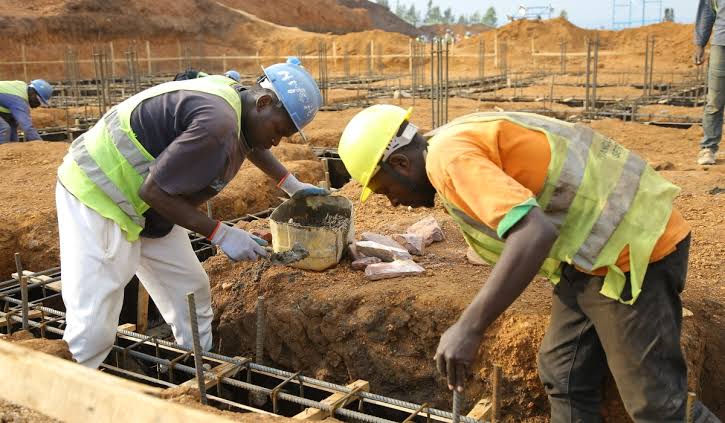
Beyond speeches and resolutions, African workers are already demanding that Africa must break free from this cycle of dependency.
Odigie explains why African workers are concerned with the debt crisis
He says; “Why are we leading this, it is because we want to see a continent that is prosperous, that indeed truly, no one is left behind. Our struggle for social justice should not just be on slogans. We are hitting the streets, we are putting pressure on creditors and we are asking African debtors governments to do well to change their pattern.”
Experts argue that a key factor keeping Africa in debt is biased credit ratings. Existing international credit rating systems unfairly categorize African economies as high-risk, making it more expensive to borrow.
In response, the African Union has launched the African Credit Rating Agency—an initiative aimed at providing fairer assessments and reducing borrowing costs for African nations.
The African Union has declared 2025 the Year of Reparations—a rallying cry to confront both historical and ongoing injustices.
UN Secretary-General António Guterres highlights the systemic flaws: “The current international financial system is outdated, dysfunctional and unfair — to Africa and beyond. It was built for the world of 1945, not the twenty-first century. The current system not only reflects historical injustices — it exacerbates them.”
For Africa to overcome its debt crisis, campaigners argue that urgent actions are needed: debt cancellation, fairer global trade systems, and reparations.
“The reality is that for African countries to overcome the debt crisis and the impacts of climate change there must be debt cancellation and a complete move away from colonial debt architecture that has burdened the continent for decades. In this year of reparations, the African Union must ensure both debt cancellation and a new United Nations Framework Convention on Debt are agreed,” said Andrew Mamedu, the Executive Director of ActionAid Nigeria.
Way Forward:
Indeed, to break free from this cycle of dependency, African nations must not only demand reparations but also rewrite the rules of global finance. Only then can the continent realize its vast potential and ensure a brighter future for generations to come.
Odigie says to get out of the debt trap, African leaders must also redesign its tax policies, cut government expenditure, and plug leakages.
“I need us as a continent to rethink the way we do things. We need to redesign our tax policies. Our tax policies are creating too many loopholes and leakages. We need to plug illicit financial flows and so we can recoup money to drive development. Let’s have a progressive tax regime. It is wrong when only the workers pay taxes and the rich evade taxes.
He says Africa must cut down the size of its government citiing the case of Nigeria that operates a bicameral legislature, Odigie says “it is an unsustainable way of spending,” adding that “We do not have the resources to sustain it.”
He also called for Inclusiveness that involves other stakeholders in debt management discussions, alleging they there is a lot of corruption in the debt recovery mechanism
He says, “if you want to get out of the woods, let’s have an inclusive process of managing our debts. Include other stakeholders whom the debt servicing and debt burden affect. Let them also have a say. It has to be inclusive so that people can also serve as watchdogs and levers for accountability