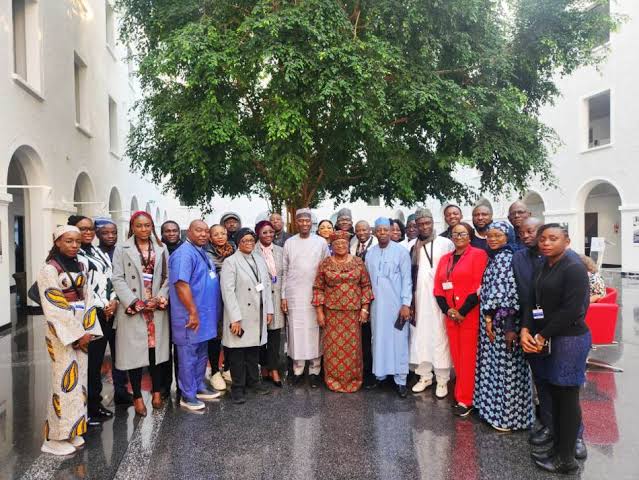
By Eunice Orike
Nigerian delegation, permanent secretary of the ministry of industry, trade and investment, Nura Abba Rimi has expressed deep appreciation for the leadership and constructive engagement of World Trade Organisation, WTO, members during Nigeria’s 6th Trade Policy Review.
This was disclosed in a statement by the director press and public relations officer of the ministry, Adebayo Thomas.
The permanent secretary, Nura Abba Rimi who made the appreciation, extended special thanks to Ambassador Athaliah Molokomme for her excellent technical assessment and the WTO Secretariat team for their foundational work.
Speaking at the event, Rimi emphasized Nigeria’s unwavering commitment to a fair, inclusive, and equitable Multilateral Trading System.
He highlighted the positive outcomes of President Bola Ahmed Tinubu’s ambitious reforms aimed at reestablishing macroeconomic stability and ensuring inclusive growth.
According to him, Despite challenges such as Naira devaluation and rising inflation, Nigeria remains focused on narrowing the gap between economic growth and social development, with policies that enhance economic opportunities for women and youth.
Rimi outlined the government’s dedication to improving the investment regime and ease of doing business under President Tinubu’s leadership.
Adding that, Efforts through the Presidential Enabling Business Environment Council (PEBEC) and the new visa policy aim to simplify procedures and create a conducive atmosphere for businesses to start and grow in Nigeria.
Addressing customs procedures, he acknowledged the need for improvement and shared ongoing initiatives, including the Trade Modernization Project and the deployment of 67 scanners across customs seaports and border posts.
Regarding import prohibitions, he assured that temporary measures would be reviewed as part of ongoing reforms.
He also noted the advice on aligning tariffs and border taxes with Nigeria’s development objectives and committed to reviewing technical barriers to trade and sanitary and phytosanitary measures.
In the energy sector, he outlined the government’s efforts under the Petroleum Industry Act (PIA) and the Energy Transition Plan (ETP) to balance energy demand and reduce carbon footprint, with a focus on gas as a transition fuel.
Rimi also emphasized the constructive nature of the review process and assured continued commitment to trade reforms and WTO obligations.
However, he reaffirmed Nigeria’s dedication to the advancement of the multilateral trading system and ensuring that trade policies and practices are consistent with WTO obligations.