By our correspondant
At the Beeta Arts Festival 2025, young Nigerians are discovering that creativity isn’t just expression, it can be a career, a livelihood, and a gateway to global relevance.
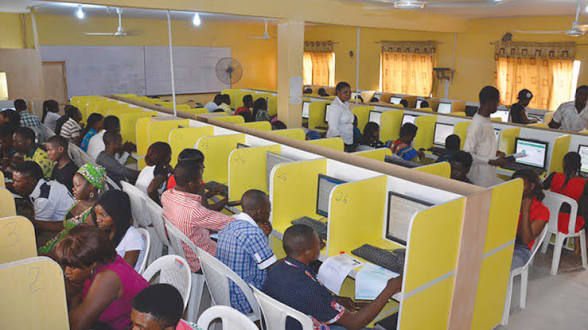
Inside the hall at the Abuja Continental Hotel, young Nigerians listened to established filmmakers, costume designers, song writers, learning the business side of their craft.
The conversations in the room extended beyond talent, touching on structure, funding, mentorship and collaboration. For many participants, the Beeta Arts festival is not just another event, it is a learning space, a networking ground, and a door into an industry they know has room for them, but often feels shut.
Its founder, Bikiya Graham-Douglas, understands this struggle all too well. She recalls starting her career without a compass, no platform to direct her path, mentor her ambitions, or link her to existing industry structures.
That absence is what now fuels her drive to create spaces where young creatives can not only showcase their skills, but also learn, collaborate and find their footing in an expanding industry.
She says, “When I started, there were no platforms like this to help me navigate and direct me
“I have seen the importance of creating platforms for young people, for emerging voices. They are the future, and the creative sector has the capacity to absorb a lot of them.”
She noted that the growing demand for talent in film, theatre, fashion, design and production proves that Nigeria’s creative industry has the capacity to absorb millions of young people and should be treated as a strategic solution to unemployment in the country.
Graham-Douglas emphasized that the development of the sector must be driven by collaboration, partnerships and shared responsibility, not solely by government.
“We don’t have to wait for the government to do everything. We all have a responsibility to make our society better. Where you can, do something to make the lives of people around you better,” she added.
Already in its 5th year, this year’s edition of the festival with the theme “connected voices” with support from the United Nations Development Programme (UNDP) and other partners, goes a step further by translating talent into employability.
Beyond the performances and workshops, the festival is building a network that links young creatives and fresh graduates to practical job opportunities, industry placements and professional mentors, turning artistic passion into sustainable work.
“One of the key things that attracted us to the festival was its strong affiliation with the creative sector and the opportunities it creates, particularly for jobs for young people,” Clare Henshaw, Head of Inclusive Growth at UNDP Nigeria said.
According to her, the UN organisation is partnering with Beeta Arts Festival to boost youth employment by connecting young Nigerians to job opportunities in the creative space.
She explained that UNDP, through the Nigeria Jubilee Fellows Programme (NJFP) a $47 million initiative funded by the European Union and supported by the Nigerian government will be connecting fellows to employers they ordinarily could not access in the sector.
According to her, over 14,000 young Nigerians have already been placed in organisations nationwide, with 10 percent retained in full employment and 20 percent starting their own enterprises.
Henshaw said the collaboration with Beeta Arts Festival would enable the programme to link trained fellows to organisations in film, theatre, fashion, production, and other creative fields represented at the festival.
“Our goal is to introduce fellows to creative organisations present here today, connect them to opportunities where they can interact and find meaningful jobs. The creative sector has enormous potential, but sometimes accessing it can be difficult. This platform makes that possible,” she said.
She added that the UNDP hopes to develop a database of creative industry employers willing to absorb fellows at the end of the programme cycle.
Creative Arts and campaign against Gender-Based Violence
On the first day of the Festival, stakeholders in Nigeria’s creative and cultural sector, alongside gender rights advocates, gathered at the National Assembly Library where they emphasized need to use storytelling to inspire behavioural change, challenge stereotypes and amplify voices against gender-based violence across Nigeria.
“Arts and culture provide a physical and emotional connection that digital campaigns alone cannot achieve. Storytelling has the power to shift perspectives, to humanize victims, and to inspire action,” Bikiya said as she welcomed the participants.
Bikiya Graham-Douglas, an award winning movie producer, further emphasized the need for collaboration by stakeholders to ensure that efforts translate to real change.
“Implementation may be slow, but we cannot stop. We must continue to push. That is why we have this kind of event where we highlight our realities and what we could do better. Men also have a very important role to play, we must work together,” she said.
Also speaking, the Director-General of the Center for Black and African Arts and Civilization (CBAAC), Aisha Adamu Augie, said the festival offers a vital platform to drive advocacy for policies that support gender justice, particularly during the global 16 Days of Activism against GBV.
She noted that technology and creativity can either reinforce harmful stereotypes or challenge inequality, depending on how they are used.
She said, “Beeta Arts Festival has brought us to the forefront, and it brings to fore the activities of the creative sector, not just the creative but also the cultural sector. These sectors are sectors that pull in a lot of people and can be used to change societal norms, to change attitudes and behaviors for better. And so it is very important for us to continue to use the avenues of the creative and cultural sector to support society. That, in itself, puts us in a better position to build a better economy, build a better life for our people.
“So the creative and cultural sector cannot be put aside. It is a very important sector when it comes to creating change and supporting policies and using it to advocate for better.”
Similarly, the Executive Director of Gender Strategy Advancement International, Adora Sydney-Jack, described storytelling as one of the most powerful tools for dismantling harmful social narratives and exposing the lived realities of women and survivors of violence.
She explained that when issues are contextualized through familiar cultural experiences, advocacy becomes relatable and more likely to inspire action.
“To disrupt a status quo that has existed for decades, storytelling remains one of the most instructive tools we have. It allows us to bring the conversation closer to the community, using our cultural expressions — film, comedy, entertainment, theatre, skits — to normalize dialogue on violence, equality and rights,” she said.
Sydney-Jack called on government agencies such as the Ministries of Tourism, Information, National Orientation Agency, and the Nigerian Tourism Development Corporation to leverage storytelling as a national communication strategy, especially for educating citizens about policy reforms and their impact at the grassroots.
She also urged more men to actively participate in shaping conversations around gender justice. “We need more men-led organizations advocating for women, and more male voices in the media and civil society. This is not about women versus men, it is about humanity. The conversation must continue after we leave this room, and that requires everyone’s voice,” she added.