…demand accountability from govt, oil companies
By Michael Oche
Ten years after Nigeria joined the World Bank and United Nations’ “Zero Routine Flaring by 2030” initiative, a global pact to end routine gas flaring, civil society organisations have expressed deep disappointment over the country’s continued inability to meet its commitments.
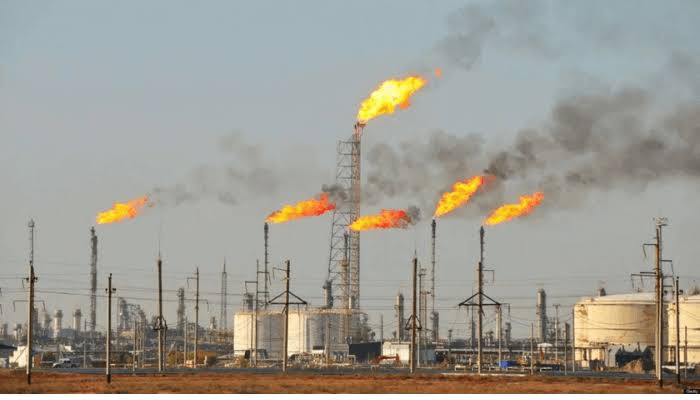
In a joint statement issued on Tuesday, the Koyenum Immalah Foundation (KIF), the Centre for Transparency Advocacy (CTA), and Women in Extractives (WiE) lamented that despite multiple policy frameworks and shifting deadlines, millions of Nigerians, particularly those in oil-producing communities in the Niger Delta, still live under the toxic glow of active gas flares.
Nigeria, an early signatory to the initiative launched in 2015, had initially pledged to end routine flaring by 2020. The target was later moved to 2025 and, just last year, shifted again to 2030.
According to the groups, this culture of moving the goalpost dates back as far as 1969 and highlights the gap between policy pronouncements and real change on the ground.
“While targets shift, the realities remain unchanged: many oil-producing communities in Nigeria—especially in the Niger Delta—still live with active flare sites just meters away from their homes, farms, and water sources,” the statement noted.
The groups acknowledged that Nigeria has taken important steps on paper—such as the Petroleum Industry Act (PIA) of 2021, the Nigeria Gas Flare Commercialization Programme (NGFCP), the Climate Change Act, and the Energy Transition Plan (ETP)—but stressed that implementation has lagged behind, and progress by oil companies remains neither transparent nor independently verifiable.
Calling for urgent action, the organisations urged the Nigerian government to fully enforce the existing legal and policy frameworks; the National Assembly to open an investigation into Nigeria’s stalled commitment, and oil companies to publish clear progress reports on flare reduction.
They also called on civil society and media to ramp up monitoring and public awareness efforts, and demanded that affected communities be included as partners rather than treated as passive victims.
“Routine gas flaring is a triple threat: it wastes valuable energy, destroys lives and livelihoods, and worsens the climate crisis,” the statement concluded. “It is no longer enough to make pledges. It is time to act.”
The civil society coalition urged Nigeria not to be remembered as a country that kept shifting its targets while communities continued to burn, but to instead lead the charge towards clean air, energy justice, and real accountability.