By Michael Oche
The Civil Society Network on Migration and Development (CSOnetMADE) and Network Against Child Trafficking, Abuse, and Labour (NACTAL) have called for an urgent investigation into allegations of human rights abuses of two Nigerians recently deported by the German government.
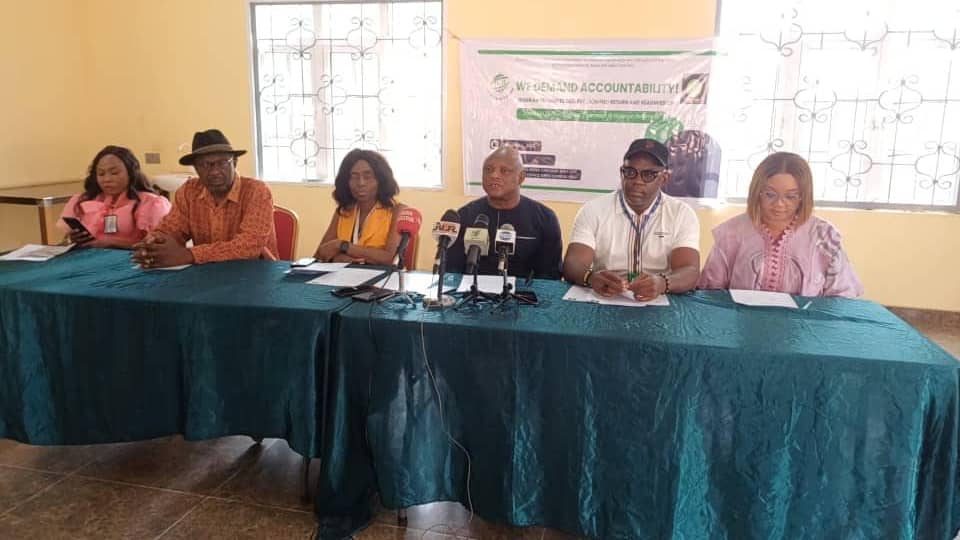
Addressing journalists in Abuja on Thursday, the two organisations who have been promoting safe and dignified Return, Readmission, and sustainable reintegration, raised the alarm over the inhumane treatment of deportees, including allegations of physical and psychological abuse.
Emeka Xris Obiezu, National Coordinator, CSOnetMADE who spoke on behalf of the organisations said the Nigerian government must ensure that the rights and dignity of deportees are protected, including access to medical care, legal representation, and social support.
He said the treatment of Nigerians during deportation is an urgent national and international concern, saying that the Nigerian government must act swiftly to investigate these allegations, protect the rights of its citizens, and hold accountable those responsible for these abuses.
Obiezu highlighted the specific case of a Nigerian, Bright Obasuyi who was deported on January 22, 2025 by the German government in an inhuman manner, despite being medically unfit for travel.
He said, “an alarming case of systemic abuse. On January 22, 2025, a plane carrying deportees from Germany arrived in Lagos. Among the passengers was Bright Obasuyi, a Nigerian citizen with documented medical conditions, including schizophrenia and epilepsy. Despite being declared medically unfit for travel by health professionals and legal advocates in Germany, the authorities proceeded with his deportation.
“Upon arrival, Bright was unconscious and in critical condition. The whereabouts of another deportee who also arrived unconscious remain unknown.”
According to Obiezu, while recounting his harrowing ordeal, Bright recounted being violently dragged from his home at midnight, brutally beaten, chained, and subjected to degrading treatment by German police, immigration officers and other collaborating agencies.
Despite legal and medical interventions aimed at halting his deportation, Bright was forcibly administered medications, removed from his house and deported in chains around the head like a helmet and was throttled intermittently to inflict pain and discomfort.
Obiezu said, “Upon arrival in Nigeria, Bright remained shackled. Before losing consciousness, he recounted seeing Nigeria Immigration Service Officials taking videos and photos of him. He passed out shortly after and required immediate medical attention.
“This distressing case, along with other related incidents, highlights the gross violations of human rights endured by Nigerian deportees. A recent report from Refugees for Refugees, a civil society organization in Germany, underscores the urgent need for government action by detailing abuses against children, pregnant women, and individuals with disabilities during deportation processes.”
The CSOs said given the severity of these human rights violations, the Nigerian government must act without delay, noting that immediate and decisive measures are essential to protect the dignity, health, and safety of Nigerian deportees.
They acknowledged that Nigeria has established an architecture for migration governance, demonstrating its commitment to safe and dignified migration, saying this commitment is evident through Nigeria’s active participation in the GCM, its leadership role as the Chair of the Rabat Process, and the development of Standard Operating Procedures (SOPs) guiding RRR activities.
Obiezu said, “Building on Nigeria’s commitment to ensuring safe and dignified migration, we demand the following: Thorough Investigation: Launch an independent, transparent investigation into the allegations of human rights violations during deportation, particularly by German authorities, and determine the whereabouts of the other unconscious individual.
“Publicly release the investigation findings and ensure that those responsible for abuses are held accountable. Guarantee that deportees are received with dignity and provided with immediate medical and psychological support upon arrival.”
They also advocated for granting Civil Society Organisations the authority to participate in pre-departure and post-arrival activities to monitor deportees’ conditions and safeguard their rights.
He said further, “Diplomatic Engagement: Engage with German authorities to address these violations and ensure future deportations adhere to international human rights standards. Review of Standard Operating Procedures on Return, Readmission, and Reintegration: Review and update the Standard Operating Procedures on Return, Readmission, and Reintegration to recognize and address issues related to forced returns, ensuring that they align with international human rights standards.