By Ere-ebi Agedah Imisi
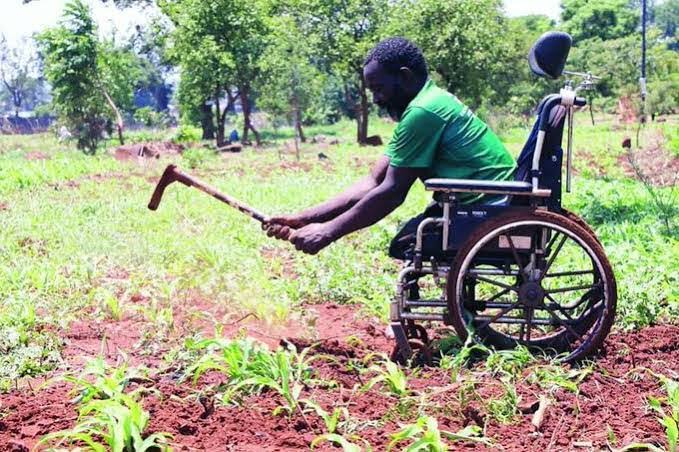
The National Commission for Persons with Disabilities, NCPWD has intensified its efforts to empower persons with disabilities through agriculture by distributing fertilizers and essential farming tools to various disability groups.
The initiative, which took place recently, is part of the Commission’s ongoing commitment to fostering inclusion and economic empowerment in Nigeria’s agricultural sector.
According to a statement issued by the Commission’s Head of Media and Publicity, Ishaku Kigbu on Tuesday, the distribution aligns with the Commission’s goal of providing assistive technologies that support the production of goods and services by persons with disabilities. By equipping beneficiaries with the tools necessary for farming, the NCPWD aims to increase agricultural productivity while improving livelihoods among persons with disabilities.
Speaking on behalf of the Executive Secretary, Mr. Lawrence Idemudia emphasized that the initiative goes beyond the distribution of tools. “This distribution is part of our broader goal to support and enhance the lives of persons with disabilities. We have more initiatives in the pipeline to further empower our beneficiaries,” he said.
The beneficiaries of this initiative include representatives from key disability organizations such as the Joint National Association of Persons with Disabilities, the Nigerian Association of the Blind, the Nigerian National Association of the Deaf, the Albinism Association of Nigeria, the Association for Intellectual and Developmental Disability of Nigeria, the National Association of Persons with Physical Disabilities, the Spinal Cord Injury Association of Nigeria, and Persons Affected by Leprosy.
Through initiatives like this, the NCPWD continues to demonstrate its dedication to promoting an inclusive society where persons with disabilities are equipped to contribute meaningfully to national development.
Meanwhile, the Commission reaffirmed its commitment to creating sustainable opportunities that empower persons with disabilities and enhance their participation in key economic sectors, particularly agriculture.