…Holds meeting on Onchocerciasis, LF assessments
By Palma Ileye
Federal Government, in collaboration with Sightsavers Nigeria and the Bill and Melinda Gates Foundation, have taken steps to eliminate Neglected Tropical Diseases, NTDs, in Nigeria.
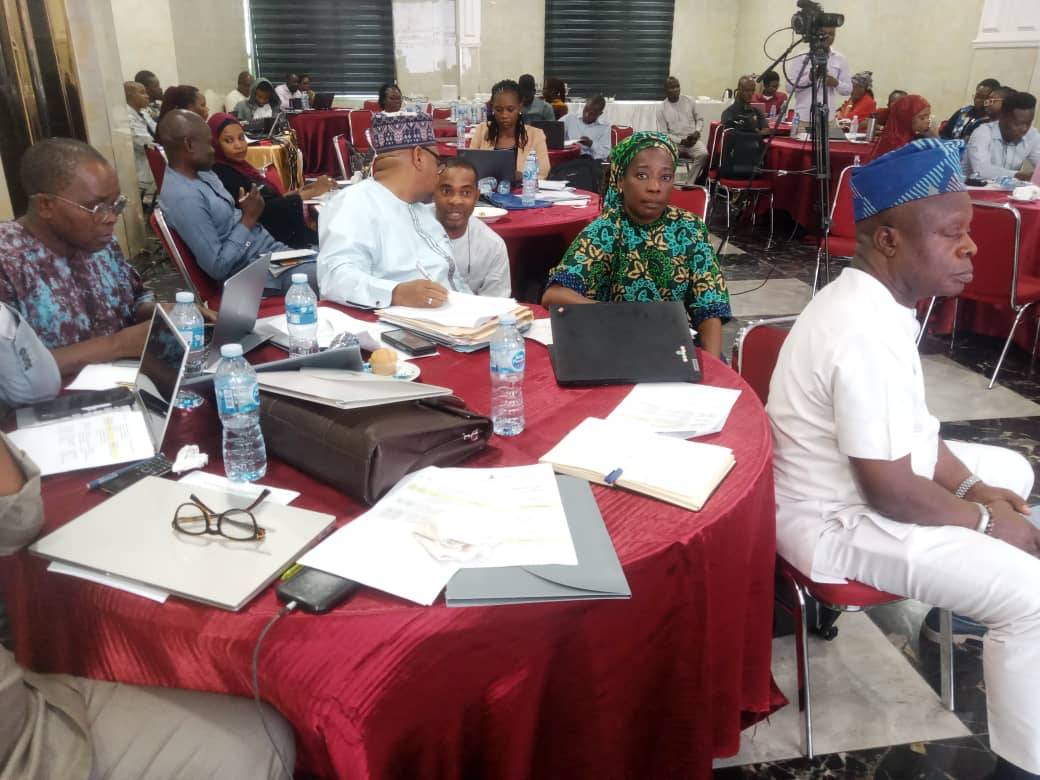
In a meeting held today in Abuja brought together key partners, government officials, and stakeholders, discussed progress, challenges, and collaborative efforts in the fight against NTDs in the country.
Speaking at the event, NTDs Program Director at Sightsavers Nigeria, Anita Gwom, stated that Nigeria bears the highest burden of neglected tropical diseases in Africa.
Gwom emphasized that over 2 million people were affected—either directly or indirectly noting that in many ethnic communities, simply residing there puts individuals at risk of contracting these diseases.
She said, “As the giant of Africa, we unfortunately also lead in the prevalence of River Blindness and other NTDs. Nigeria has the largest burden of the NTDs in Africa. More than two million persons directly or indirectly affected by the disease because once they are resident in the communities they are prone and can be affected by it.
“We started this journey a long time ago and most of the endemic communities have been provided with choice medicines to control the disease and through community mass drug administration treatment has been ongoing for over 20 years in most of the endemic communities. We use community based approaches.”
Explaining the process of the elimination, she stated, “We began this journey a long time ago. Most endemic communities have received essential medicines to control these diseases. Through mass drug administration at the community level, treatment has been ongoing for over 20 years.”
She also explained that Sightsavers employs community-based approaches to ensure that every eligible individual receives the necessary medication saying, “We have committed volunteers who distribute these medicines door to door. They are trained to ensure efficient and equitable distribution.”
She added that the current focus was on conducting comprehensive assessments to evaluate progress and determine next steps.
“This meeting is to identify gaps and assess what remains to be done. Without proper evaluation, we cannot move forward or achieve our goal of eliminating NTDs in Nigeria. We cannot continue treating communities indefinitely,” she said.
She also cited growing insecurity in parts of Nigeria as a major challenge.
“Insecurity prevents us from accessing areas eligible for assessment, as we cannot risk the lives of our field staff. In States like Kaduna, Katsina, Borno, and Niger, the high level of insecurity makes it impossible to assess the progress made by the program,” she disclosed.
Gwom noted that Sightsavers typically partners with State governments, working with policymakers to implement interventions adding that, “However, access to these governments can sometimes be difficult.”
“In some States, we have seen strong commitment even from Governors who have provided direct funding for NTD implementation. But more needs to be done,” she said.
She urged greater awareness and support from State leaders to achieved the goal aim by November 2025.
She also said, “At this final stage of elimination, we need their involvement more than ever. Starting a project is easy, but completing it is the real challenge.”
She stressed the importance of resource mobilization at all levels stating that, “We understand the funding environment is shrinking. Foreign aid is no longer as reliable, so we are calling on the government and Nigerian philanthropists to support efforts to eliminate NTDs.”
Also speaking, Director and National Coordinator of Neglected Tropical Diseases at the Ministry of Health and Social Welfare, Mr. Fatai Oyediran highlighted the purpose of the meeting saying that the objective was to convene the Project Management team for the Lymphatic Filariasis and Onchocerciasis assessment project, supported by the Bill & Melinda Gates Foundation.
He said, “This body functions like a steering committee—reviewing what has been achieved in the past six months and strategizing based on successes and challenges.”
Oyediran explained that the project, initially set to end in February 2025, was extended to September 2025 to allow for proper assessment.
He said, “The aim is to determine whether we can stop Mass Drug Administration, MDA. For the past 10–15 years, we’ve continually distributed medication to affected populations. We cannot keep treating people without knowing the current status of disease transmission.
“We must start by first acknowledging that our country unfortunately holds a significant share of the global Neglected Tropical Disease burden represented largely by Onchocerciasis and Lymphatic Filariasis. The impact of these diseases on the people and economy of the endemic countries are well documented and the effort to eliminate them are central to the push to lift millions of the at-risk populations out of poverty.
“The fight to control or eliminate NTDs in Nigeria has gone on for over three decades and significant progress have been achieved with the support of our NGDO partners, funders and the academia.
“Today, we have eliminated Onchocerciasis in two states and interrupted the transmission of the disease in 9 States, while another nine states have attained advanced stages of the implementation milestones and may interrupt transmission before the end of the year 2025. The same goes for Lymphatic Filariasis Elimination Programme that has now achieved the interruption of Lymphatic Filariasis transmission in a total of 379 LGAs.”
He emphasized that the Ministry and its partners were committed to using evidence-based guidelines to assess areas treated for many years.
“The goal is that by the end of September 2025, approximately 32 million people will no longer require treatment under this project.
“We therefore have the responsibility to continue to be transparent, accountable and above all seen to be achieving the programme milestones and objective with a sense of prudence and fiducial responsibility. The reality also calls on us to intensify effort towards integration and ownership and we are confident that we will begin to see improvement especially with the unfolding strategies of the Coordinating Minister of Health and social Welfare,” he said.
On his part, Prof. Oladele Okogun a Public Health Parasitologist based in Europe, praised the team’s achievements saying, “We have come to celebrate the fact that we have surpassed our target deliverables for this phase. We have only five years left to eliminate Lymphatic Filariasis, and we are on track to meet this goal.
“Though much work remains, and challenges are increasing, we are encouraged by the dedication of communities and partners. The day will come when no one will need these medicines anymore.”
He expressed excitement over the progress made by the Project Management team in controlling both Onchocerciasis and Lymphatic Filariasis.
“For a disease where communities have been receiving medicine for over 20 years, we are now providing the evidence needed to stop treatment. These are ancient diseases, but elimination is within reach.
“Nigeria currently carries the highest burden in Sub-Saharan Africa. But what we have done proves that these diseases can be eliminated by 2030,” he said.
He concluded by stressing the urgent need for funding and resources as he said that, “To achieve elimination before the target date, we need financial support to complete these critical surveys.”