
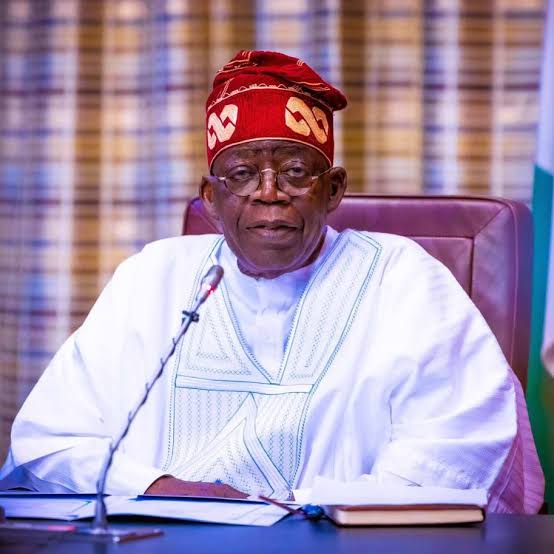
President Bola Tinubu’s Renewed Hope Agenda has made significant strides in its first two years, focusing on economic transformation, poverty reduction, and enhanced transparency in governance. Matthew DADIYA writes.
President Bola Tinubu’s administration has completed two years in office, and the Renewed Hope Agenda—his flagship program, has made significant strides in various sectors.The agenda focuses on economic transformation, poverty reduction, and enhanced transparency in governance.
Irrespective of initial challenges, the administration has displayed efforts to address key issues, including hunger, food security, and empowerment of citizens.
President Tinubu said that the economy is sailing in the right trajectory, assuring his government is displaying an effort to banish hunger and a commitment to food security and “the empowerment of our people. once we liberate ourselves from hunger, we will appreciate peace and harmony.”
The President reaffirmed the commitment of his administration to securing Nigerians’ future, rebuilding prosperity, and ensuring that every Nigerian shares in the dividends of governance… “After the initial turbulent take-off, our people can see signs of progress and the promise of a better future. Our economy is turning the corner.”
According to him, going by experiences of the past and the need to depart from old ways, our reforms have been hard—I made tough decisions so that we could grow—we are gradually seeing the light at the end of the tunnel.
One of the primary objectives of the Renewed Hope Agenda is economic transformation with the implemention of policies aimed at stimulating economic growth, creating jobs, and increasing revenue.
Highlights of 8-point Renewed Hope Agenda
The President Tinubu recalled, “on the day of my inauguration, I had to decide on something not originally in my speech, and that was the fuel subsidy removal. The hallmark of a great leader is the ability to make the right decision at the right time… I stood firm, knowing it was the right thing to do for our nation’s future.
“We will invest more in technology and takeover the forests. Security is a national issue, not just at the local or regional levels. If we genuinely need investment in Nigeria, we must address security. Investment will not go where there is banditry and terrorism. We
will solve the problem together with the states and local councils
“We cannot achieve Eldorado in one day.
But we are on the path to it. We will
succeed by the grace of God Almighty.
We are resetting the economy, and it
looks far better.
The administration removed fuel subsidies, which has saved the government a significant amount of money. This move has also encouraged private sector participation in the economy.
Economic Reforms: The fiscal deficit dropped sharply from 5.4% of GDP in 2023 to 3.0% in 2024, thanks to stronger revenue collection and greater transparency.
Increased Oil Investments: Fresh investments in the oil sector exceeded $8 billion, with rig activity more than quadrupling its 2021 level.
Improved Debt Profile: Emergency borrowing has been curtailed, and key ratios have improved, with the debt-service-to-revenue ratio falling from nearly 100% in 2022 to below 40% in 2024.
Infrastructure Development: Hundreds of road projects are under construction or rehabilitation, including the Lagos-Calabar Coastal Highway and the Abuja-Kaduna-Zaria-Kano dual carriageway; and flag-off of construction of 1,068km
Sokoto-Badagry Superhighway,
President Tinubu reshuffled cabinet and the commencement of the implementation of zero VAT and excise duties on pharmaceutical products and medical devices, in line with presidential directive Nigeria exits Aviation Working Group’s (AWG) watchlist for non-compliance as rating rises to 75.5% as the Central Bank of Nigeria announced that the nation’s foreign exchange reserves have hit the highest level in 33 months.
President Tinubu on State Visit to
France; ensured that the Port Harcourt Refinery resumes crude oil processing, and attended the G20 Summit, in Rio De Janeiro, Brazil; attended Extraordinary Arab-Islamic Summit in Riyadh, Saudi Arabia and hosted Indian Prime Minister Narendra Modi on first visit to Nigeria.
Tinubu presented 2025 budget,
themed “Budget of Restoration: Securing
Peace, Rebuilding Prosperity” to a joint session of the National Assembly
In the same period, Shell announced $5 billion Final Investment Decision (FID) on Bonga North deep water project
In January 2025, Federal Civil Service commenced recruitment process; while the president did a groundbreaking of construction of Mini Liqueed Natural Gas (LNG) Plants in Ajaokuta, Kogi State.
In February, 2025, President Tinubu signed the N54.99 trillion Appropriation Bill into law. Nigeria also secured £1billion and $1billion financing for manufacturers in the health sector from European Investment Bank and Afrexim Bank; as well as introduction of 50% subsidy (capped at N400,000) for cancer patients undergoing radiotherapy.
Also, the Nigerian Bureau of Statistics announces GDP growth of 3.84% year-on-year in 4th quarter of 2024, the fastest pace in 3 years. Tinubu approved $1.2billion performance-based nancing initiative for state governments to strengthen primary healthcare (PHC) systems.
President Tinubu hosted German President, Frank-Walter Steinmeier to State Visit, commissioning of Bola Tinubu Technology Innovation Complex, for the Nigeria Immigration Service.
The administration released N44 billion to settle pension arrears of FGN retirees under the Contributory Pension Scheme.
President Tinubu signs North Central
Development Commission bill alongside the bill establishing Federal University of Environmental Technology, Ogoni.
In March 2025, the President signed South-West and South-South Development Commission bills into law; Nigerian Youth Academy (NiYA)—a platform dedicated to skill acquisition and youth empowerment—unveiled; and 125km Benin–Asaba Superhighway Project flagged off under a Public-Private Partnership (PPP) model as well as signing of the commercial phase of the $1.1 billion Green Imperative Project to boost agriculture productivity between Nigeria and Brazil, also with the launch of the National Health Fellows Programme (774 Fellows).
While in April 2025, the Federal Government gazettes AfCFTA Provisional Schedule of Tari Concessions (PSTCs), establishing zero duties on 90% of goods traded within Africa.
Moreso, in May being the month of the two years anniversary, President Tinubu administration did full repayment of $3.4billion IMF COVID19 assistance loan obtained in 2020, and “Nigeria First” policy for mandatory procurement and prioritization of locally made goods was announced.
Within the two years anniversary, President Tinubu led government done: Over $50 billion in new Foreign Direct Investment (FDI) commitments; 2X-3X increase in federal allocation to State and Local Governments; 5X growth of Net FX reserves from 2023 to 2024, to $23.11bn, despite repayment of over $10 billion in debts; highest GDP growth in three years: 3.84% in 2024 Q4.
It has neutralized 13,543 terrorists/criminals, 17,469 arrested and 9,821 hostages rescued 211,118 weapons and 252,596 assorted ammunition recovered; procurement of 25+helicopters/aircraft and 4+ vessels for the military; significant drop in food prices across markets; recapitalization of Bank of
Agriculture (BoA) underway; distribution of fertilizers and other farm inputs to farmers nationwide.
The administration has within 24 months in office, said it released 42,000MT of grains across the 36 states and FCT; establishment of Livestock Development Ministry; over $8 billion in new oil and gas investments unlocked; over $500 million in investments through the Presidential CNG initiative; over 75,000 new jobs created in the solid minerals sector; 6,003 MW highest ever daily power generated recorded, with an ongoing Legacy Projects: Fast-tracking of N1.5 trillion road concession project under the Highway Development and Management Initiative (HDMI); ongoing infrastructure upgrades at airports nationwide; commencement of commercial operations
on Port Harcourt – Aba railway.
The government added that over 300,000 beneficiaries of Students’ Loan Scheme across Nigerian tertiary institutions; over N80 billion disbursed to revitalize over 8,000 primary health centres across the 36 states and FCT; over 2,500 health workers recruited, 60,000 others retrained; introduction of zero tariffs, excise duties VAT on imported pharmaceutical inputs and APIs.
Despite the achievements of the Renewed Hope Agenda, the administration has faced challenges and criticisms. Some of the challenges include: The economy has experienced high inflation rates, which have affected the purchasing power of citizens; the administration has faced security challenges, including banditry and kidnapping, which have impacted on the economy and citizens’ well-being; and corruption remains a significant challenge, with some critics arguing that the administration has not done enough to address the issue.
In view of these challenges and criticisms, the administration has displayed efforts to address key issues and promote development. As the administration moves forward, it is essential to build on the progress made and address the challenges that remain. With sustained efforts and commitment to the Renewed Hope Agenda, Nigeria can achieve its development goals and improve the lives of its citizens.
As the administration looks to the future, the administration should continue to implement policies that promote economic growth, including investing in infrastructure and supporting the private sector; the government should prioritize addressing security challenges, including banditry and kidnapping, to create a stable environment for economic growth and citizens’ well-being. The administration should continue to promote transparency and accountability in governance, including strengthening anti-corruption agencies and promoting open budgeting to drive development and improve the lives of Nigerians.


