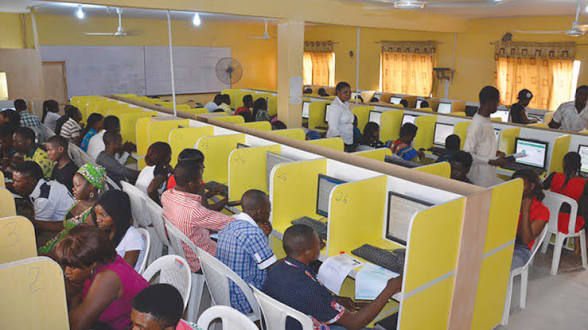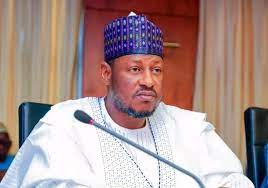
If you ask a Nigerian along the street, they would tell you that not a state from the North of Nigeria, but southern states should win in an education-related policy of government. However, Katsina State has emerged as the winner of the Transforming Education System at States Level, TESS program. Our correspondent, Fauziyya LAWAL, writes from Katsina State.
Katsina State has written its name in bold letters on Nigeria’s education map by clinching the first position in the Transforming Education Systems at State Level, TESS programme, an achievement that comes with prize tag of $12.18 million.
In a competitive field where several states vied for recognition, Katsina distinguished itself through clear policies, effective implementation and a demonstrable commitment to transforming its education sector. A feat which shows that a North-West State can also take first position in the implementation of education policies aimed at transforming the state in line with the globally accepted standard.
While other states continue to struggle with fragmented approaches and piecemeal reforms, Katsina has shown consistency in aligning local strategies with global best practices. It is a clear case of performance outpacing rhetoric. The government policies do not just exist in papers, the evidence is there for people to verify and testify.
Comparatively, states like Kano, Kaduna and Bauchi long considered education giants in the North have rolled out ambitious projects but often falter at the stage of sustainability and monitoring. Katsina’s edge lies in its integrated approach, reforms that cut across infrastructure development, teacher training, technology adoption and the sensitive but critical inclusion of the Almajiri school system.
By tackling traditional challenges with modern solutions, Katsina has managed to stay ahead of the curve. Other states from the geopolitical region and, indeed, the whole of Nigeria, have a lot to learn from the education policies and programs of the state Governor, Dikko Umar Radda.
On assumption of office, the Governor did not hesitate to implement programs that would put the state at par with others, not only in Nigeria, but others where high education standard is valued in the world. It shows that he did not assume office to learn in power, but had a clear vision of what transformations he wanted to bring to bear even before winning the election.
Governor Dikko Umaru Radda has made education reform one of his administration’s cornerstones. Since assuming office, the Governor has consistently emphasized that education is the foundation for sustainable development. He has backed this conviction with practical actions, prioritizing funding, strengthening, supervision and ensuring that every child, regardless of background, has access to quality education. After all, one of the responsibilities of the Katsina State Government, under the present regime, is to ensure that high quality education becomes affordable and accessible to all, as demonstrated.
Equally pivotal to this landmark achievement is the role of the State Commissioner of Education, Zainab Musa Musawa. Just as the Governor has the political will to transform the education sector, he has been able to have an expert in the field who shares the same vision. Under her leadership, the ministry has pursued policies that emphasize accountability, innovation and inclusiveness.
She has championed reforms aimed at bridging the gaps between urban and rural schools while also ensuring that teachers are adequately trained and motivated. Musawa’s stewardship has created an enabling environment for the TESS programme to thrive. The framework for the transformation of the state’s education system was drawn by the Ministry of Education under her watch.
At the operational level, the TESS programme in Katsina is headed by Binta Abdulmumin, whose expertise and dedication have been instrumental in securing the state’s victory. Her coordination of the programme ensured that the state not only met, but surpassed the benchmarks set by the initiative. Together with the commissioner and her team, Abdulmumin has steered Katsina through a reform journey that has now become a benchmark for others. What this means is that Katsina State education policies and programs have become reference points for other states to follow. This is not a small achievement by any means. It is as a result of the selection of the right team of leaders to steer the affairs of government, especially in the education sector.
Globally, education is increasingly seen as the currency of development. Nelson Mandela once said, “Education is the most powerful weapon which you can use to change the world.” Katsina’s success under TESS reflects this wisdom, serving as a reminder that states that prioritize education stand a better chance at breaking the cycle of poverty and underdevelopment.
Moreover, achievements such as this are silent, unlike the provision of infrastructural facilities that are shown at different points of the state as sign boards for all to see. But this achievement is not lesser, it is at the core of the foundation of human empowerment, no wonder the governor realized this fact early enough.
The award also places Katsina in a new league of credibility before international donors and development partners. The $12.18 million prize is not just a financial gain, it is symbolic capital that signals efficiency, innovation and accountability. As one civil society leader in Katsina observed, “This is a badge of honour. Katsina has proven that it can compete, not only with its peers in the North but with the best across Nigeria.” We can also add here that, in competing, Katsina State has not only shown the ability to compete, but has won the first position in the competition.
The challenge, however, lies ahead. For Katsina, the task is to consolidate these gains by ensuring that the funds are channelled into projects that directly impact the lives of students and teachers. Stakeholders insist that the money should translate into better classrooms, improved welfare for teachers and expanded access for disadvantaged children, especially in rural communities. But, not to worry, the government has shown that the interests of the people are its priorities. It is believed that more money to invest in the education sector would translate to more achievements in Katsina State.
Other states too, must draw lessons that success in education reform comes not from slogans but from sincerity, innovation and persistence. The Katsina story underlines that when political will, administrative commitment and professional expertise converge, transformation is inevitable.
The most important in this is the political will shown by the governor, Umar Dikko Radda. Although the state was seen as one of the educationally disadvantaged, belonging to the North of Nigeria, the governor’s commitment to project the state as one of the best in the country has made the difference, placing the state ahead of others.
It is the political will that also ensures that the right set of experts are contracted to do the job. The governor did not make a mistake in choosing his Commissioner for Education as well as the Head of the TESS program in Katsina State.
What this award represents is more than a victory for Katsina, it is a statement that sub-national governments can lead the way in Nigeria’s development story. Katsina has set a standard and the rest of the country is now watching.
There are so many challenges that face Katsina State presently. They include banditry, terrorism, insurgency, high level of poverty, among others. But the government of the state has not allowed itself to be weighed down by the. This shows how true leadership should be. It shouldn’t be about looking at the reasons not to perform, but about defying all odds to achieve for the people.
Today, the name of the State has been written in the book of history because of the calibre of leaders it produced to steer the affairs of the state and the commitment on the part of these leaders to entrench positive changes in the state.