By Disun Amosun
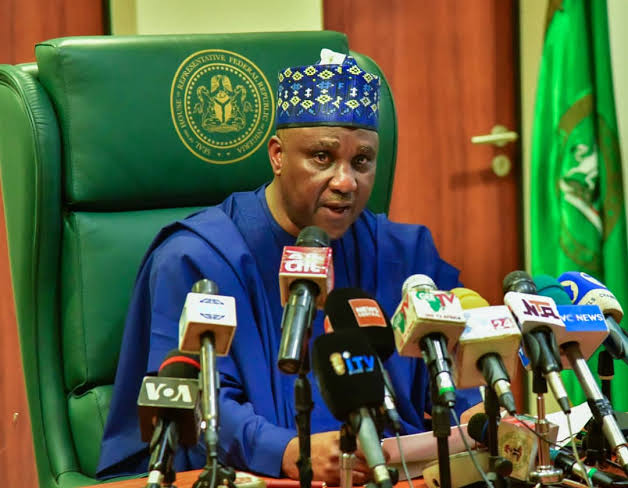
The Speaker of the House of Representatives Rt. Hon. Abbas Tajudeen, has restated the significant contributions of women to Nigeria, describing them as a driving force in the socio-economic growth of the country, adding that they should be allowed to take leadership positions in politics and economy.
The Speaker said this at the final ceremony of the Women’s Policy Lab in commemoration of International Women’s Day. The event was organized by the House of Representatives and a non-governmental organisation, Gender Mobile Initiative in commemoration of this year’s International Women’s Day.
The Women’s Policy Lab is a concept that linked female applicants with mentors and gender-based NGOs to develop solutions to the various socio-economic and political issues affecting women.
The candidates were grouped into five clusters, which identified gender-based challenges and formulated ideas and strategies that can solve them.
Speaker Abbas said the commemorative ceremony was “a global reminder of the incredible strides women have made in fostering social, economic, and political progress and an opportunity to reflect on the persistent challenges that must be overcome to achieve full gender equality.”
He said: “Today’s occasion also allows us to acknowledge the important contributions of President Bola Ahmed Tinubu’s administration, whose commitment to inclusive governance has laid a solid foundation for women’s advancement. Under his leadership, the Federal Government has continued to strengthen programmes and policies that promote women’s participation in key areas such as finance, entrepreneurship, education, and healthcare. These deliberate efforts reflect a recognition that when women prosper, the entire nation prospers.
“Indeed, Nigerian women have been a driving force in our social and economic growth. They serve as leaders in diverse industries, from agriculture and technology to healthcare and academia. Still, there remains a pressing need to address specific challenges—such as unequal access to education, financial resources, and political representation—that disproportionately hinder their potential. Through economic empowerment initiatives, targeted legislation, and broader advocacy campaigns, the government and its development partners are working assiduously to reduce and ultimately eliminate these gender disparities”, he said.
The Speaker said he was particularly pleased to celebrate the dedication of 50 exceptional young women who have invested time and effort to develop pragmatic solutions addressing the obstacles that stand in the way of women’s rights, economic empowerment, and political inclusion. He added that their work highlights both the determination of Nigerian women to excel and their ongoing struggles against cultural, economic, and political barriers.
He stated that the Women’s Policy Lab represents a bold, forward-thinking response to some of these challenges by empowering young women to craft policy recommendations that bolster existing frameworks.
Central to the efforts made by the 10th House, Speaker Abbas stated, is a Legislative Agenda that prioritises bills designed to enhance women’s representation, including proposals for special seats in legislative bodies and quotas within political parties. He added that similar reforms have yielded transformative results in other nations, “and Nigeria – being a leading voice on the African continent – cannot afford to lag behind.”
The Speaker urged the state Houses of Assembly to endorse the bills and proposals when presented for ratification. “Let us pave the way for a truly inclusive future that benefits us all,” he said, while calling upon national and international agencies, alongside civil society organisations, to broaden this advocacy, especially at the sub-national level.