By Fauziyya Lawal, Katsina
Katsina State is set to launch a massive immunisation campaign aimed at protecting 4.8 million children from Measles, Rubella and Polio, in partnership with the United Nations Children’s Fund UNICEF. The integrated exercise will be implemented across all 34 local government areas of the state, with the first phase running from October 6 to 13, 2025.
The campaign was formally unveiled during a one day media dialogue in Katsina, where the Chief of UNICEF Kano Field Office, Rahama Rahood Farah, underscored the urgency of the exercise, describing it as a “critical milestone in the state’s efforts to eliminate preventable childhood diseases.”
Farah explained that despite progress made in halting the circulation of the poliovirus, Katsina still faces challenges. “In 2025, two cases of a polio variant were confirmed in Danmusa LGA, compared to 17 cases reported across eight LGAs in 2024. This shows progress but we cannot afford to be complacent,” he said.
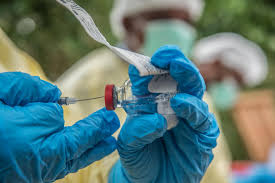
He disclosed that 3,698,500 doses of the novel oral polio vaccine (nOPV2) have been allocated for the campaign, targeting 2.3 million children under five years old. In addition, children aged nine months to 14 years will be vaccinated against Measles and Rubella through fixed posts, temporary outreach centres, and house-to-house visits.
To achieve comprehensive coverage, a massive mobilisation of human resources has been planned. A total of 2,253 vaccination teams will be deployed across the state while 5,584 additional teams will deliver routine immunisation services. These include 3,761 house to house teams, 993 transit teams at special points, and 830 stationed at fixed posts.
Farah also called for stronger political and community involvement. “With barely two months before the national deadline for interrupting poliovirus transmission, we urge LGA chairmen to take full ownership of this campaign by personally monitoring pre and intra campaign activities and chairing daily review meetings to track progress,” he emphasised.
Addressing community resistance remains a key priority for UNICEF and the state government. According to Farah, 3,300 health workers have been trained on interpersonal communication skills while 600 Non Compliance Resolution Teams (NCRTs) have been established to address refusals in real time. Each NCRT comprises a community leader, traditional ruler and vaccinator, who will engage directly with caregivers to resolve concerns during the campaign period.
As part of the drive, 462 Voluntary Ward Supervisors (VWSs) and 4,647 Voluntary Community Mobilisers (VCMs) have been engaged to boost awareness and improve turnout at vaccination points. 34 LGA chairmen and 70 district heads have already signed a joint declaration supporting immunisation efforts, signalling strong local commitment.
The Executive Secretary of the Katsina State Primary Health Care Agency, Dr. Shamsuddeen Yahaya, welcomed the campaign as a timely intervention, noting that evidence has shown underreporting of Rubella cases in the state. “This is an opportunity to protect our children from diseases that threaten their lives and future. Alongside the Measles and Rubella drive, we will conduct the regular polio campaign targeting children from birth to 59 months,” Yahaya said.
Overcoming these challenges will not only halt the spread of the virus but also strengthen confidence in the state’s primary health care system.