By Emmanuel Obisue
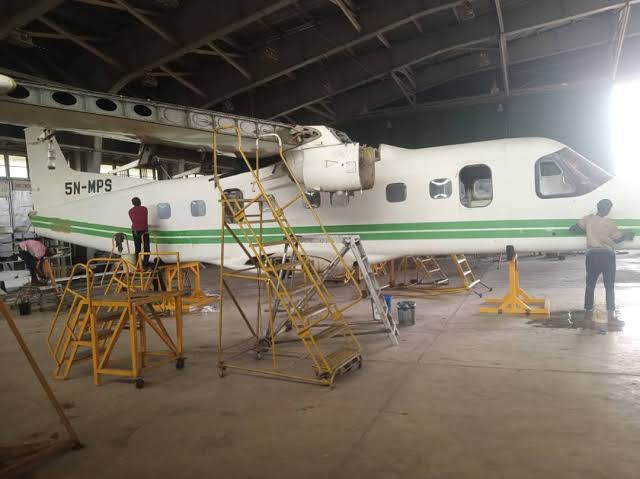
In a remarkable display of skill and innovation, the Nigerian Air Force, NAF, has successfully reactivated a Dornier DO-228 aircraft that had been grounded for an astonishing 23 years.
Nigerian Pilot reports that this significant achievement not only showcases the NAF’s growing technical expertise, but also emphasizes its commitment to self-reliance in aviation maintenance, further solidifying Nigeria’s aviation capabilities.
According to a statement on Wednesday by NAF spokesman, Air Vice Marshal Olusola Akinboyewa, the aircraft, initially designated “5N-MPS” and previously operated by the now-defunct Ministry of Mines, Power, and Steel, had been stationed at the DANA facility in Kaduna since 2001.
Following a Presidential directive for Ministries and Agencies to transfer grounded aircraft for evaluation, the NAF took on the ambitious project of reactivating the aircraft. Redesignated “NAF-039,” the aircraft had only logged 1,081 flight hours since its initial service, making it a valuable asset for Nigeria’s aviation fleet.
The statement added that between June and September 2024, a team of five engineering officers and 40 technicians from the NAF 431 Engineering Group in Kaduna meticulously carried out the reactivation process, employing advanced engineering techniques and adhering to strict aviation standards. The successful completion of this task highlights the NAF’s increasing capacity to perform complex maintenance projects that were once outsourced to foreign contractors.
Air Marshal Hasan Abubakar, Chief of the Air Staff, commended the efforts of the 431 Engineering Group, emphasizing the project’s broader significance. “The successful reactivation of NAF-039 is not just an operational gain; it is a statement of our capabilities and our commitment to self-reliance,” he said.
Nigerian Pilot notes that the milestone follows closely on the heels of another NAF achievement earlier in 2024, where they successfully conducted the first in-country 4,800-hour inspection on a different DO-228 aircraft.
The aircraft, now an integral part of the NAF’s tactical airlift capabilities, will support critical missions across Nigeria. More than just an engineering success, this accomplishment underscores the NAF’s ongoing drive for technical autonomy, innovation, and its vital role in safeguarding national security.
The achievement further positions Nigeria as a leader in indigenous aircraft maintenance and technical expertise within Africa’s aviation sector.