By Onu Okorie
The Minister of State, Petroleum Resources, Gas Ekperikpe Ekpo, has disclosed that Nigeria has one of the largest proven gas reserves in the world with over 200 trillion cubic feet of proven natural gas reserves, yet we recognise that value is only created when resources are developed and utilised.
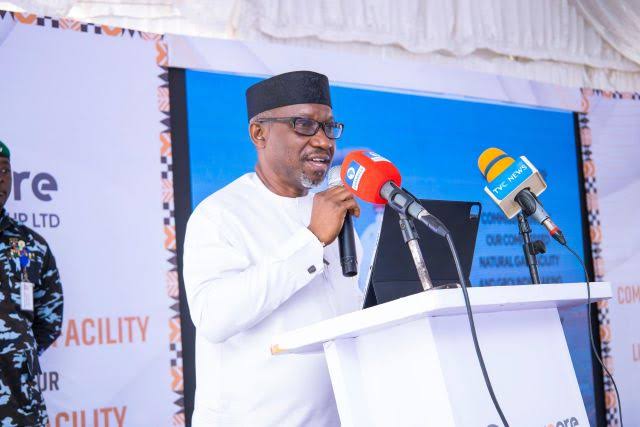
He stated this during his address at the 24th Edition of the NOG Week 2025
Theme: “Accelerating Energy Progress through Investment, Global Partnerships & Innovation”
According to him, “through the Decade of Gas Initiative, we are focused on translating our vast gas wealth into tangible socio-economic benefits, this includes driving industrialization, expanding power generation, increasing domestic LPG usage, deepening gas-to-transport adoption, and growing gas export capacity.”
He also said that the full implementation of the Petroleum Industry Act (PIA) has improved regulatory clarity and investor confidence, offering a single, transparent legal framework that investors can rely on. The Act also introduces a revised fiscal framework that is more competitive globally, especially in the gas and deepwater sectors.
“We have made considerable progress in addressing legacy debts to gas producers and ensuring commercial frameworks for key infrastructure are viable.
“The activation of the Midstream and Downstream Gas Infrastructure Fund (MDGIF) now provides a dedicated vehicle for capital mobilization. From modular gas plants to pipeline expansion and virtual gas networks, we are aligning investment incentives with project execution.”
He explained that the energy development cannot and must not be pursued in isolation, saying that Nigeria remains committed to strategic partnerships; bilateral, multilateral, and regional that deepen cooperation, expand market access, and enhance energy security across the continent.
“In this regard, I am pleased to share that the Ajaokuta–Kaduna–Kano (AKK) Gas Pipeline has achieved a significant milestone, marking a major leap in our drive to industrialize Northern Nigeria and strengthen internal gas distribution. We are equally optimistic that the OB3 Gas Pipeline and River Niger crossing will reach similar progress shortly, as we work to fully interconnect our national gas grid.” He stated.
According to him, “Regionally, our pipeline diplomacy is bearing fruit. We are committed to the long-standing West African Gas Pipeline (WAGP), which continues to deliver gas from Nigeria to our West African neighbours. Furthermore, the Trans-Atlantic Gas Pipeline, also known as the Nigeria–Morocco Gas Pipeline (NMGP), spanning over 5,000 kilometres and linking over a dozen countries, is advancing steadily. This transformative project will enhance regional integration, boost gas accessibility, and ultimately connect to the European market.”
“In addition, we are progressing on the Nigeria–Equatorial Guinea Gas Pipeline, a strategic collaboration that will provide access to Equatorial Guinea’s gas processing and export facilities. This project exemplifies our commitment to regional energy interconnectivity and monetisation of stranded gas assets.”
“Furthermore, the Trans-Saharan Gas Pipeline (TSGP) remains an important part of our long-term regional strategy and will benefit from continued alignment between Nigeria, Niger, and Algeria.”
“We are prioritising innovation across every segment of the gas value chain. From digitising metering and deploying AI for surveillance, to piloting smart gas distribution, piloting CNG-fueled mass transit systems, and promoting carbon capture solutions, Nigeria is actively adopting 21st-century technologies to future-proof its gas sector.”
“Just as important is indigenous innovation. With the support of the Nigerian Content Development and Monitoring Board (NCDMB), we are strengthening local manufacturing, engineering, and R&D capacity—ensuring that Nigerian companies are not just participants but leaders in our energy ecosystem.
“ While we pursue growth, we must also ensure sustainability. The world is transitioning—but the pace, structure, and timing of that transition must be context-specific. Nigeria’s transition must be just, equitable, and inclusive. It must account for our developmental needs, energy poverty, and economic aspirations.” He said.