By Aaron Ossai
Deputy Speaker of the House of Representatives, Hon. Benjamin Kalu has expressed concern over the rising number of Internally Displaced Persons in the South Eastern part of Nigeria lamenting that the region has over 268,000 internally displaced persons (IDPs) spread across 158 camps and affected communities.
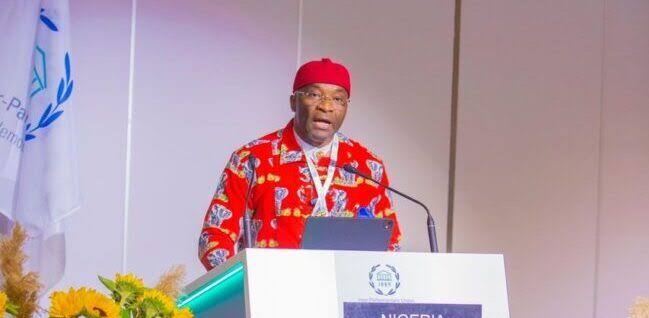
Hon. Kalu who made the revelation while speaking at a Roundtable Discussion with International Non-Governmental Organizations, INGOs in a programme titled “Through Their Eyes: A Call To Action, Addressing Humanitarian Challenges In The South East” in Abuja on Monday said that the States of Enugu, Imo, Abia, Anambra, and Ebonyi are the most affected, with many people lacking access to clean water, adequate shelter, healthcare, and education.
Organized by the Office of the Deputy Speaker in conjunction with Peace In South East Project (PISE-P), Hon. Kalu said the purpose of the roundtable discussion was to essentially explore avenues for deeper partnerships, to engender resilience, and to deliver sustainable solutions to some of the nation’s most pressing ecological issues.
He said that the crisis in the SouthEast region is characterized by displacement, violence, and ecological challenges, including natural disasters like gully erosion that have destroyed homes and left many without shelter.
Speaking further, Kalu emphasized the need for collaborative efforts to provide immediate humanitarian relief and sustainable development solutions therefore called for support from international non-governmental organizations (INGOs) and government agencies to address the crisis.
“A special welcome to you to this roundtable with INGOs, a convening that underscores the pivotal role of collaboration in addressing Nigeria’s humanitarian, ecological, and systemic challenges.
“The Southeast geopolitical zone of Nigeria is grappling with a severe humanitarian crisis, characterized by displacement, violence, and ecological challenges.
“Report presented today underscores the grim realities: over 268,000 internally displaced persons (IDPs) are spread across 158 camps and affected communities. The states of Enugu, Imo, Abia, Anambra, and Ebonyi bear the brunt of this crisis, with precarious living conditions leaving many without access to clean water, adequate shelter, healthcare, and education.
“Shelter, in particular, remains a pressing concern. Families live in makeshift camps or overcrowded host communities, exposed to health risks, insecurity, and a loss of dignity.
“Natural disasters like gully erosion have destroyed homes, leaving little to return to. This crisis demands not only immediate intervention but also sustainable strategies to restore stability and hope”, he said.
Recognizing INGOs’ contributions, Kalu said that their work has been instrumental in addressing the challenges.
In their separate remarks, the head of INGOs in Nigeria, Camilla Higgins; the Director-General of Nigeria Hydrological Services Agency, Umar Ibrahim Mohammed; the national coordinator of National Social Investment Programme Agency; Dr. Badamasi Lawal; the Director-General of National Refugees Commission and Migrants, Alhaji Aliyu Ahmed; representatives of the Directors-General of National Directorate of Employment (NDE) and National Emergency Management Agency (NEMA) who were obviously overwhelmed by the degree of ecological challenges and human crisis in the South East region arising from a video documentary pledged their respective commitments to collaborate with the Office of the Deputy Speaker to address the menace.