By Disun Amosun
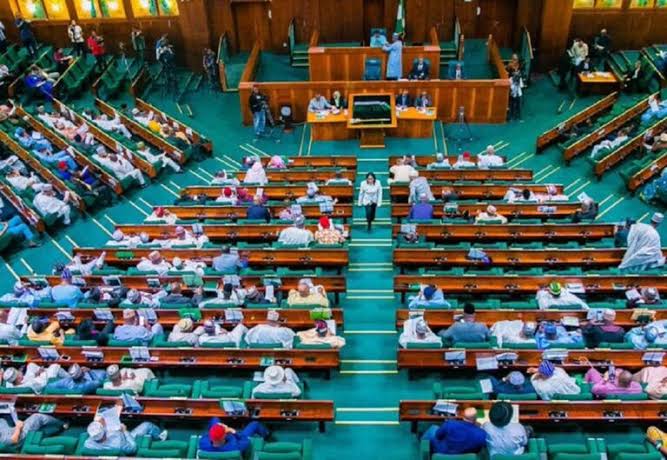
Speaker House of Representative Rt. Hon. Abbas Tajudeen Wednesday tasked stakeholders and the general public at the commencement of a 3-day Hearing on the 4 Tax Reform Bills to realize that if Nigeria must address and reduce her reliance on debt financing, it must through the ongoing multi-dimensional legislative process on the bills, ensure fiscal stability to secure her future as a nation.
The Speaker handed down the charge and gave assurances that the Green Chamber would seriously consider proposals and recommendations received from the tax experts and administrators that formed the bulk of the stakeholders at the Hearing.
Rep Abbas advised stakeholders to look more on how the proposed tax reform bill will diversify the revenue base, promote equity and foster an enabling environment for investment and innovation.
The Speaker outlined the many legislative processes the bills had been subjected to since their introduction into parliament, starting with a pre-legislative hearing on Nov. 2024 with proponents of the bills, leading to consultations among lawmakers, followed by further meetings with their various constitutes, including state governors all in a bid to build consensus, and come up with bills that aligns with the interests of every level of the society.
“The bills were then considered on the floor of the House and unanimously passed for second reading, culminating in the ongoing Hearing. ##
Contributing to the the Hearing, Chairman House Committee on Finance, the lead organizers of the hearing, Rep. Abiodun Faleke said it represents a crucial stage in the collective effort to modernize, harmonize, and strengthen our tax system for the benefit of all Nigerians.
“For many decades, our tax laws have remained largely unchanged. While these laws served their purpose at the time they were enacted, the economic and business landscape has evolved significantly over time. Some provisions in our existing tax laws are now outdated and are no longer in tune with current economic realities.
“The tax laws that will be repealed by the tax reform bills when enacted are Companies Income Tax Act (CITA) – 1979, Value Added Tax Act (VAT) – 1993, Personal Income Tax Act (PITA) – 1993, Income Tax (Authorized Communications) Act – 1966, Capital Gains Tax Act – 1967, Stamp Duties Act – 1979, Casino Act – 1965, Deep Offshore and Inland Basin Act -1999, Industrial Development (Income Tax Relief) Act – 1971, Petroleum Profit Tax Act – 1959 and the Venture Capital (Incentives) Act – 1993.
The committee chairman noted that most of these Acts have been amended severally over the years. Since 2019, successive Finance Acts have been introduced to provide “quick fix” amendments to some of these archaic provisions, however, these amendments have been piecemeal and have not comprehensively addressed all the issues within our tax system.
According to Faleke, despite being the largest economy in Africa, Nigeria’s tax-to-GDP ratio remains one of the lowest on the continent. In 2023, data from the International Monetary Fund (IMF) showed that Nigeria’s tax-to-GDP ratio was approximately 9.4%, compared to South Africa at 21.6%, Kenya at 14.1%, and Senegal at 19.1%.
Faleke added that experts have estimated that Nigeria requires $3 trillion (₦1.8 quadrillion) over the next 30 years (that is, equivalent to $100 billion annually) to bridge its infrastructure deficit. However, our IGR falls significantly short of this amount, leading the government to borrow substantially in order to bridge the funding gap.