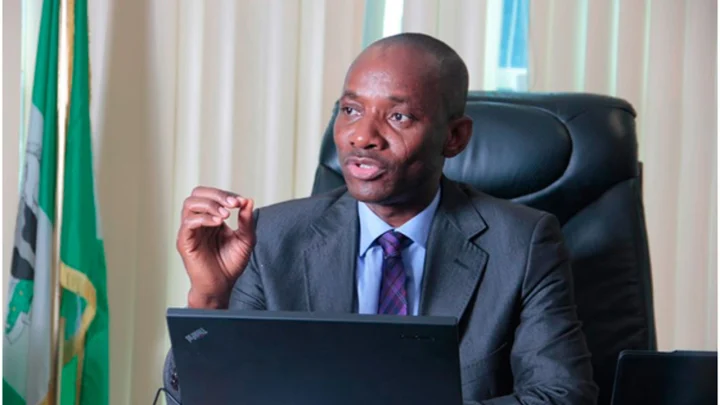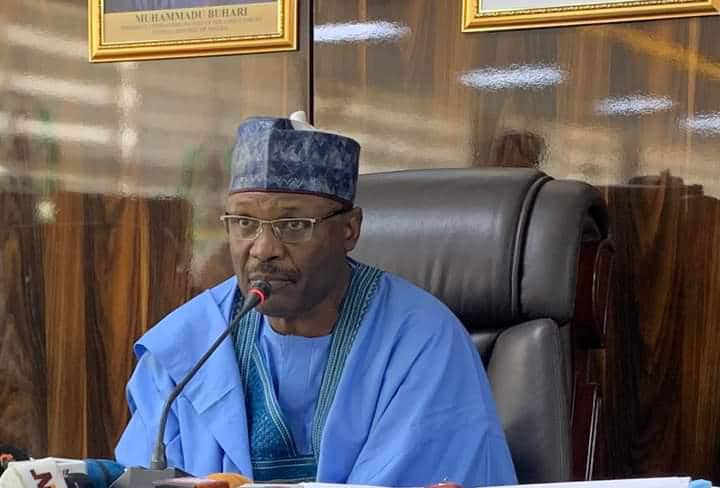
Official INEC meeting featuring Justice Liman and Mahmood Yakubu on electoral oversight.
Can elections in Nigeria be truly credible, and why have the various election reform laws in the country not been able to address loopholes in the nation’s electoral system, leading to lack of trust in the process as well as general voter apathy?
Yes, elections in Nigeria, just like in advanced democracies of the world, can be free, fair and credible if the right things are done for the purpose of the same. What has been the order of the day is that those who are supposed to ensure transparent and credible electoral system shy away from their responsibilities because they fear that such a system could filter them out of power.
Ordinarily, in a society or state where the necessary measures have been put in place for a transparent, free, fair and credible election, there should be no much worry or concern over who becomes the Chairman of the country’s electoral body, but in Nigeria presently, the Chairman of the Independent National Electoral Commission, INEC, seems to have much influence over the outcome of elections in the country.
The tenure of the Chairman of INEC, Prof. Mahmood Yakubu is coming to an end towards the end of the year and the President, Bola Ahmed Tinubu, is expected to announce a new boss to head the electoral body, leading to calls from political stakeholders for him to appoint somebody who will ensure that the upcoming 2027 general election is credible.
More than the hullabaloo over who becomes the next INEC Chairman in the country, political stakeholders specifically and Nigerians in general should be concerned about those necessary ingredients for a free, fair and credible election.
It starts with a clean and accessible voter register. Experience in election matters in Nigeria shows that rigging was made possible in the past as a result of lack of accessible voter register, over-voting, thumb printing and ballot box snatching can be minimized or eradicated with the presence of an updated, clean and accessible voter register that shows the names, pictures, fingerprints and number of eligible voters from the ward, local government and state to the national level.
Apart from the aforementioned, the upcoming 2027 general election can be credible only if security personnel do not take sides in the process. What had been obtainable is that security agents at polling units take side with political candidates to snatch ballot boxes for thumb printing as well as help and abet falsification of results, made possible after forcefully preventing agents of rival political parties from entering the result collation center.
Result transmission is another area that needs critical attention for the 2027 general election in Nigeria to be free, fair, credible and acceptable. If results are transmitted electronically from the polling units to the INEC Result Viewing portal, IReV, the chances of corrupt candidates and their fellow politicians using security agents for results falsifications would be reduced to the barest minimum or even out rightly eradicated.
Political gladiators in the country are expected to hold the President accountable for the implementation of those reforms that would ensure that the choices of voters count during elections in Nigeria.
For example, why has Tinubu’s government which spent over thirty-nine billion naira in renovating the Abuja International Conference Center (now Bola Ahmed Tinubu International Conference Center) not done anything about acquiring the necessary gadgets for INEC to ensure that elections are transmitted electronically, bearing in mind that the commission had consistently complained of the failure of their server in transmitting results during elections, making them fall back to the manual form of result transmission, a crude way which allows for all forms of rigging in collaboration with INEC.
Therefore, our stand is that, as the tenure of Prof. Mahmood Yakubu comes to an end, and as President Tinubu prepares to announce a new INEC Chairman, instead of focusing too much on who becomes the INEC Chairman, Nigerians should be more concerned about advocating for the necessary reforms that would ensure that there are no chances for the manipulation of the results of elections in the country.
Meanwhile, the process of appointing a new chairman for the Independent National Electoral Commission, INEC, is that the President first sends the particulars of his choice of candidate to the Department of State Services, DSS, for profiling, after which the President forwards the name to the National Council of States for an advisory review. The final step is for the President to send the nominee’s name to the Senate for confirmation.