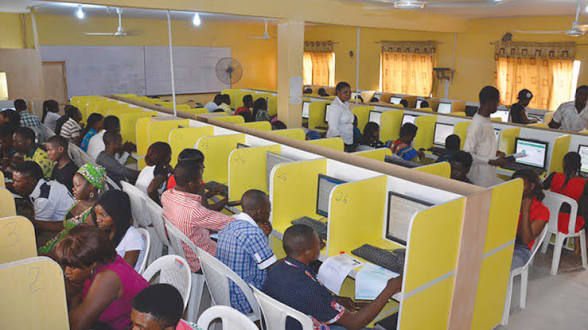
Key stakeholders gather at the forum to discuss strengthening digital skills and expanding digital inclusion efforts.
By Michael Oche
Stakeholders in the Telecom-ICT sector have called on the Federal Government to strengthen the Digital Bridge Institute (DBI), widen its scope and mandates, to fully address the issue of skill gaps in the industry.
The experts, who were speaking at a Stakeholders’ Consultative Forum on Skill Gaps in the Telecom Value Chain, said the DBI should be more empowered, funded, scope and mandates expanded to integrate more practical training; rather than establish a new National Telecom Academy.
The Forum, themed: “Bridging the Telecom Value Chain Skill Gap: Empowering Indigenous Talents for Industry Growth,” was organized by the Nigerian Communications Commission (NCC), in Lagos.
It brought together key stakeholders across the Telecom ecosystem, including operators, academia, regulators, manufacturers, startups, development partners, government agencies, state-level representatives and others.
The Vice President, Nigeria Infrastructure Fund at the Nigeria Sovereign Investment Authority (NSIA), Mr. Abraham Durosawo, said the mandates and scope of the DBI should be looked into and expanded. He added that this would definitely address some gaps noticed in the Telecom market.
According to him, the DBI has done excellently well, but needed to be strengthened further.
He suggested that DBI shareholders be expanded, while more investors who have the capital and are interested in the industry should be brought on board.
Mr. Durosawo differed; and kicked against establishing a new National Telecom Academy, when the DBI can be strengthened, expanded and well-funded.
He further argued that the solution to addressing widening telecom skill gaps in Nigeria lies in strengthening the DBI, rather than establishing a new National Telecom Academy.
He said: “The mandates and scope of the Digital Bridge Institute should be looked at and expanded to contain some of the gaps we have seen in the market. It has done an excellent job; we just need to strengthen it.
“The shareholders of DBI should be expanded, we need to bring in investors, who are thinking of long-term investment, who have the capital and who are interested in the industry to come on board. I also want to encourage those in the industry to also be shareholders there (DBI).
“The last one is around the investments. Speaking of academy, I want to differ. Why do we need a National Telecom Academy when we can strengthen the DBI.”
Other speakers at the forum include the President of the ATCON, Tony Izuagbe Emoekpere; the Chairman of ALTON, Gbenga Adebayo; and the
NCC’s Director of Technical Standards and Network Integrity, Mr. Edoyemi Ogoh, who represented the Executive Vice Chairman of NCC, Dr. Aminu Maida.
They all agreed that skill shortage was one of the most pressing challenges across Nigeria’s digital economy.
“Our industry faces a shortage of skilled professionals in vital areas including RF engineering, fiber planning, cybersecurity, data center operations, and project management,” Mr. Emoekpere, the ATCON President said.
Also, Mr. Adebayo, the Chairman of ALTON), who stressed the need for mid-level skills, said the DBI should integrate more practical training, with operators sponsoring campuses, offering scholarships, certifications, and job pathways to strengthen retention.