By Aaron Ossai and Disun Amosun
As divergent and opposing positions continue to emanate from the pro and anti Genetically Modified Organisms, GMOs on its suitability or otherwise in agricultural produce consumption, journalists have been enjoined to decipher between science based research findings and outright misinformation spewing out from those opposed to the development, for whatever reason they come up with.
The Director General National Biotechnology Research Research & Development Agency NBRDA Prof. Abdullahi Mustapha stated this Monday at a sensitization workshop for journalists in Abuja, noting that as moulders of public opinion, they need to fact-check information from both sides of the divide.
He noted that distortions of truth in a subject as important as the GMO are dangerous because they lead people to make decisions based on inaccurate or false information adding that In the context of GMOs and biotechnology, this has contributed to public scepticism, regulatory uncertainty and slow adoption of technologies that could improve millions of lives.
The workshop was organized by the Open Forum on Agricultural Biotechnology (OFAB) in Africa, Nigeria Chapter — an initiative of the African Agricultural Technology Foundation (AATF) — under the auspices o NBRDA.
The workshop, according to him came at a critical time when the developing and the underdeveloped countries around the world are grappling with compounded challenges such as food insecurity, climate change, biotic and abiotic stresses.
The need for inclusive economic growth responsibly developed and effectively adopted agricultural biotechnology offers a powerful set of tools to address these interconnected problems.
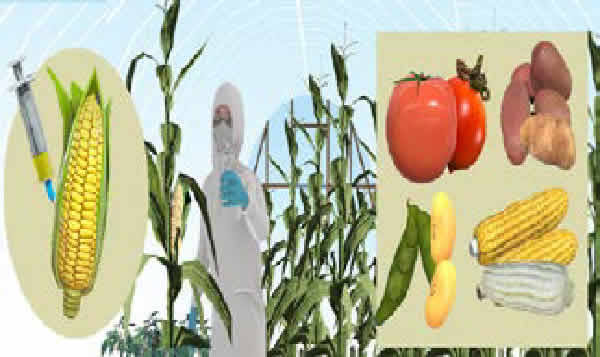
The pro-biotechnology group, consisting mainly public sector players, are of the view that with present climate change, agriculture globally faces the dual threats of drought and impending famine and to counter these, it is turning to climate-smart agricultural solutions such as high-yielding, drought-tolerant maize, herbicide tolerant soybeans, bacterial blight-resistant potato, pod borer-resistant (PBR) cowpea and disease and insect-tolerant cotton — innovations that have the potential to significantly improve the livelihoods of smallholder farmers across Nigeria.
“Among the leading innovations in this field in Nigeria are genetically modified organisms (GMOs) and their products. Scientists in Nigeria have harnessed this technology to develop crops like Bt cotton, Bt maize and PBR cowpea, which have since been commercialised. These are not just scientific milestones, they are real-world solutions that transform lives, improve food systems and strengthen farmer resilience” he added.
Other resource persons at the workshop said with the success achieved in Genetically Modified maize, cowpea and potatoes in Nigeria are indications that bio tech modified foods are safe and cost effective.