By Michael Oche
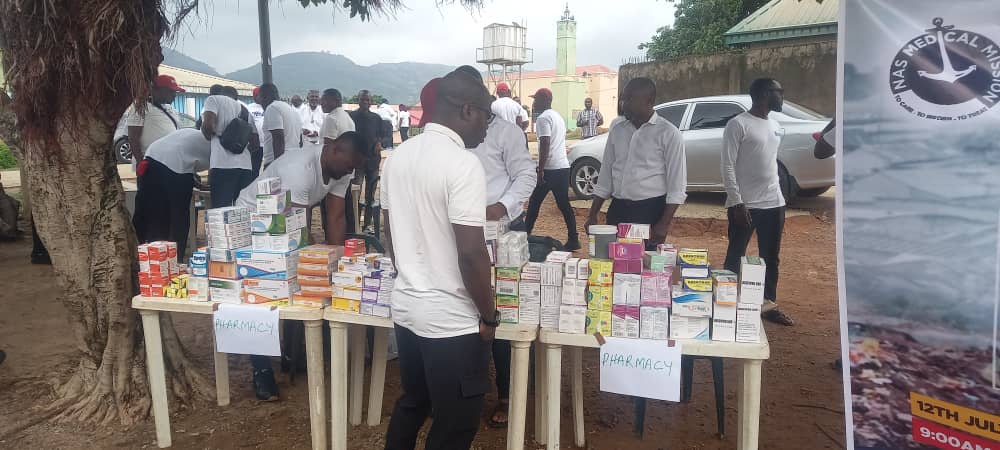
No fewer than 250 residents of Kukwaba community in the Kubwa area of Abuja have benefited from a free medical outreach organised by the National Association of Seadogs (NAS), also known as Pyrates’ Confraternity.
The Zuma and Sahara Decks Medical Outreach, held under the NAS Area 9 chapter’s Medical Outreach Initiative, was aimed at providing critical healthcare services to less privileged and underserved residents of the community, which lacks a functional primary healthcare centre.
Speaking during the event, Obinna Odunze, Area Mate of NAS Area 9, explained that the exercise was organised by the Zuma and Sahara Decks, as part of the organisation’s humanitarian activities and the Commemoration of the 91 years of Professor Wole Soyinka as well as the 40th year anniversary of the NAS Capoon Dr Joseph Oteri as a medical doctor.
“We decided to come to Kukwaba community because the area does not have a primary healthcare facility. This outreach is not only to provide medical help but also to draw the attention of government to the urgent need for proper healthcare infrastructure here,” Odunze said.
According to him, the initiative received a positive response from the community, with over 250 people turning out to access free medical consultations, medications, and other basic health services.
He explained that NAS did a scoping study and discovered that the residents of Kukwaba community needed urgent health intervention, due to the absence of any public health facility in the community
Also speaking, Victor Chukwuemeka, Medical Officer of the Zuma Deck of NAS, explained that the outreach sought to bridge the gap between the privileged and the underserved.
He recounted a tragic incident about a week earlier in the community where a resident died from undiagnosed hypertension, highlighting the urgent need for government intervention to establish health centres and increase health education.
He said, “we were here recently for an empowerment project for the community and we scoped out the need for urgent health intervention.
“We found out that in this entire community, they do not have a government health facility. The nearest public hospital is about 18 kilometers away. The only available hospital in the entire community is a private hospital which is very expensive for residents.
“Just this morning, we learnt of a case where a woman had to give birth at home because of the lack of nearby health facilities.”
During the outreach, residents received a range of medical services including blood pressure and diabetes screenings, lab tests like full blood counts and hepatitis and HIV panels, as well as health education sessions.
Chukwuemeka added that plans were underway for future interventions, including ophthalmology care to address vision issues.
He reassured that the outreach was only the beginning. “We plan to return for follow-ups based on our assessments today. Our central body is fully aware of these efforts and prepared to support us as demand grows,” he said.
He also expressed hope that the NAS intervention attracts government attention to the plight of the residents, saying that: “we are putting it out there for the government to become aware, that there are communities in FCT that urgency need health facilities.”
NAS Capoon, Dr Joseph Oteri as a medical doctor thanked the association for using the outreach to celebrate him.
He expressed concern about the absence of Primary healthcare in the community, urging the government to come to the aid of the people
He noted that NAS has been involved in a lot of medical outreach, but assured that the Association Will continue to provide humanitarian support to underserved communities across the country.
The community responded positively, with residents expressing gratitude for the free services that helped bridge the healthcare gap.
One of the residents, Hauwa while narrating her experience, told journalists that many of the residents resort to self medication due to lack of public health services
She highlighted the challenges faced by those who cannot afford private healthcare, often resorting to pharmacies for cheaper treatments despite the risks.
She said, “we don’t have a general hospital or primary health centre in Kukwaba. When people are sick, many of them don’t have money to go to the private hospital. Sometimes they go to nearby pharmacy to get drugs.”