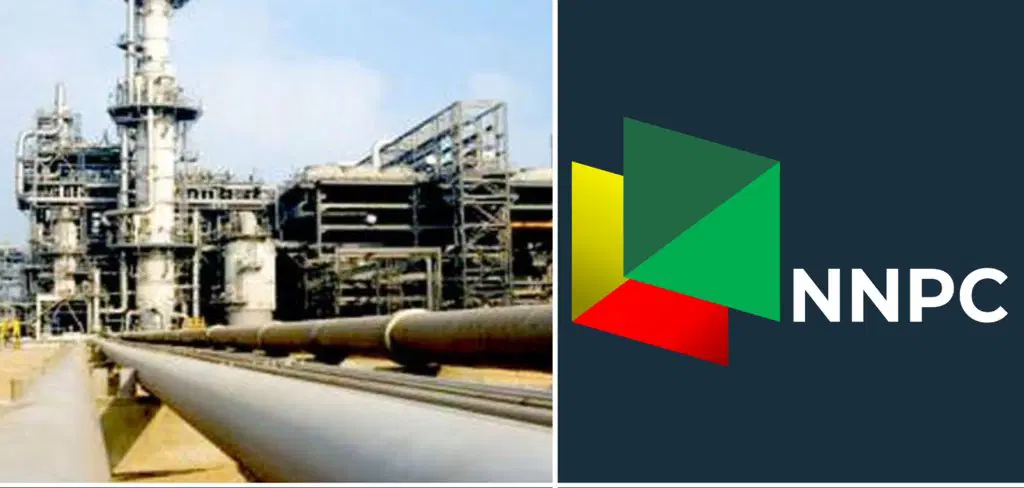
A photo showing an industrial plant with the NNPC logo, highlighting sabotage concerns.
*Reps probe $18bn spent on non-functional refineries due to alleged sabotage, vandalism
*The FG-owned refineries are Kaduna, Port Harcourt, Warri that have been moribund for years
*Parliament expressed worry over persistent non-functionality of the refineries
*It mandated its relevant C’ttees to investigate funds spent on them between 2010 and 2024
By Aaron Ossai
The House of Representatives yesterday mandated its relevant Committees to investigate a whooping sum of $18bn spent on rehabilitation of government owned petrol refineries in Kaduna, Port Harcourt and Warri over the past two decades with none of them functioning.
This followed the consideration and adoption of a motion Hon. Oluwaseun Whinghan during Thursday’s plenary session presided over by the Deputy Speaker, Hon. Benjamin Kalu.
It would be recalled that the Federal Government owns four petroleum refineries — two in Port Harcourt and one each in Warri and Kaduna that are managed by the Nigerian National Petroleum Company Limited, NNPCL.
The refineries have suffered perennial decline due to poor administration and vandalism — a situation that has left the country dependent on imported refined products.
Leading debate on general principles of the motion, Hon. Whinghan, who represents the Badagry Federal Constituency of Lagos State, said the House was worried about the persistent non-functionality of Nigeria’s state-owned refineries in Port Harcourt, Warri, and Kaduna.
He expressed concern that despite over two decades of rehabilitation efforts and an estimated $18bn spent on turnaround maintenance, there are no tangible results to show.
“The House is worried over the recent public statements by Nigeria’s foremost industrialist, Aliko Dangote, and former President Olusegun Obasanjo, expressing doubts about the viability of these refineries and describing the multi-billion-dollar investments as futile, sparking widespread public concern and outrage over potential mismanagement.
“We recall that in 2007, during the administration of President Olusegun Obasanjo, Alhaji Dangote and other private investors acquired the refineries, but the succeeding administration of President Umaru Yar’Adua reversed the transaction, opting instead for rehabilitation using public funds — a decision that has yielded no significant operational improvement.
“The House is concerned that on Thursday, July 10, 2025, the Group Chief Executive Officer of NNPC Limited, Bayo Ojulari, in an interview sought to distance the current administration from the monumental mismanagement of Nigeria’s state-owned refineries in Port Harcourt, Warri, and Kaduna.
“He confirmed their continued non-functionality despite significant investments estimated at $18bn and proposed the potential sale of these assets, thereby raising critical questions about fiscal responsibility, strategic asset management, and the long-term implications for Nigeria’s energy security and economic stability”, he stated.
Speaking further, Hon. Whinghan said that Nigerians are worried that despite consistent annual budgetary allocations over the years, “there is no verifiable evidence of substantial rehabilitation outcomes, representing a gross misuse of public funds and a betrayal of public trust.”
“We are aware that Nigeria’s economic stability and energy security are inextricably linked to a functional and accountable downstream petroleum sector, particularly following the removal of the petrol subsidy by the current administration, which underscores the urgent need for operational refineries to mitigate economic hardship.
At the end of a robust debate on the general principles of the motion, the House urged its Committees on Petroleum Resources (Upstream, Downstream, and Midstream), Gas Resources, and Public Assets “to investigate funds appropriated and disbursed for the rehabilitation of the Port Harcourt, Warri, and Kaduna refineries between 2010 and 2024.”
They were also mandated to “ascertain the status of the refineries, examine how public funds were utilised, and identify agencies responsible for infractions or mismanagement, and report within four weeks for further legislative action.”