By Aaron Ossai
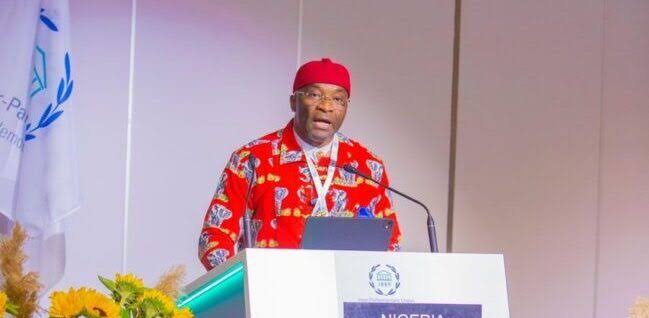
The major aim of the Tax Reform Bills before the National Assembly is to raise the revenue profile of the country and also support investments both locally and internationally, the Deputy Speaker, House of Representatives, Hon. Benjamin Kalu has said.
Kalu who shared his perspective during a meeting on UK -Nigeria Strategic Dialogue with the Deputy Leader, House of Lords and United Kingdom Minister of African Affairs, Hon. Lord Collins of Highbury in London said that the existing tax laws are obsolete and needed to be tweaked and streamlined in line with the global best practices and standards.
It would be recalled that the National Assembly is currently considering a couple of bills aimed at reforming the fiscal climate for which the federal government is engaging the stakeholders to get their input.
The bills included the Nigeria Revenue Service (Establishment) Bill, the Nigeria Tax Bill, the Nigeria Tax Administration Bill, and the Joint Revenue Board (Establishment) Bill.
Kalu, who said that Nigeria is the right destination for investments called on the UK business and the international community as a whole to increase their investment ratio in the country.
“Our tax laws have been obsolete. So, what we are trying to do now is to streamline them in line with global best practices.
“The aim is to drive revenue and also support some of the investors who have irregular tax laws affecting their revenue, streamlining them to know what they are paying for, not multiple taxation on the same issues”, he said.
Highlighting the legislative agenda of the 10th House of Representatives, the Deputy Speaker said that the Parliament has prioritized national security, law reforms, economic growth and development, social sector reforms and development, inclusion and open parliament, foreign policy, climate change and environmental sustainability for improvement.
Kalu who is also the Chairman of the House Committee on Constitution Review added that certain key areas of reform have also been outlined in the Constitution review process.
According to him, these included increased women participation in politics with creation of special seats to increase the number of women in Nigeria’s National and State Houses of Assembly; local government reforms to improve the autonomy of local government councils and their ability to deliver on development; state policing to address localized security challenges in Nigeria; improved human rights to strengthen Nigeria’s compliance with international human rights standards by empowering relevant Committees of the House to exercise more oversight of the Police and our security services; supporting reforms to improve the judiciary and enable them to perform better.